Tuff Shed Site Prep & Utilities: The San Jose Owner’s Guide
Site prep and utility work for a Tuff Shed in San Jose typically runs $1,800 to $6,500 installed, depending on whether you need a simple gravel pad or a full concrete slab with electrical rough-in, and most jobs take one to three days once permits clear. We keep the common Tuff Shed-compatible site prep materials and utility components on our trucks, so when you call, we can usually give you a written price within a day or two of seeing the site. Most owners discover site prep problems the hard way: the shed doors start binding a year after installation, the floor feels spongy in one corner after a wet winter, or the electrical outlet inside quits working the first time they plug in a circular saw.
Lodgewick ADU San Jose is an independent service provider and not affiliated with Tuff Shed. We do, however, know their products well from years of prepping sites and running utilities for everything from the smaller Pro Series cabins to the larger Premier Pro structures. Russ Delmar and the crew have seen which corners of a San Jose lot hold water, which soil types shift under a slab, and how close to the property line a Tuff Shed can legally sit.
Which Tuff Shed Models This Applies To
We handle site prep and utility work for every Tuff Shed line sold in Santa Clara County: the Pro Series (PRO 400 through PRO 600), the Premier Pro Series, the Ranch Series, and the Sierra Series. The gotcha most owners hit: your model determines exactly what kind of foundation Tuff Shed warrants and what the county inspector will want to see. Pro Series sheds 120 square feet and under can often sit on a gravel pad or precast concrete blocks, while anything larger, or anything with electrical, typically triggers a requirement for a poured concrete slab or sonotube piers. That requirement comes from the city of San Jose, not Tuff Shed, and it’s where we spend a lot of time untangling confusion for homeowners.
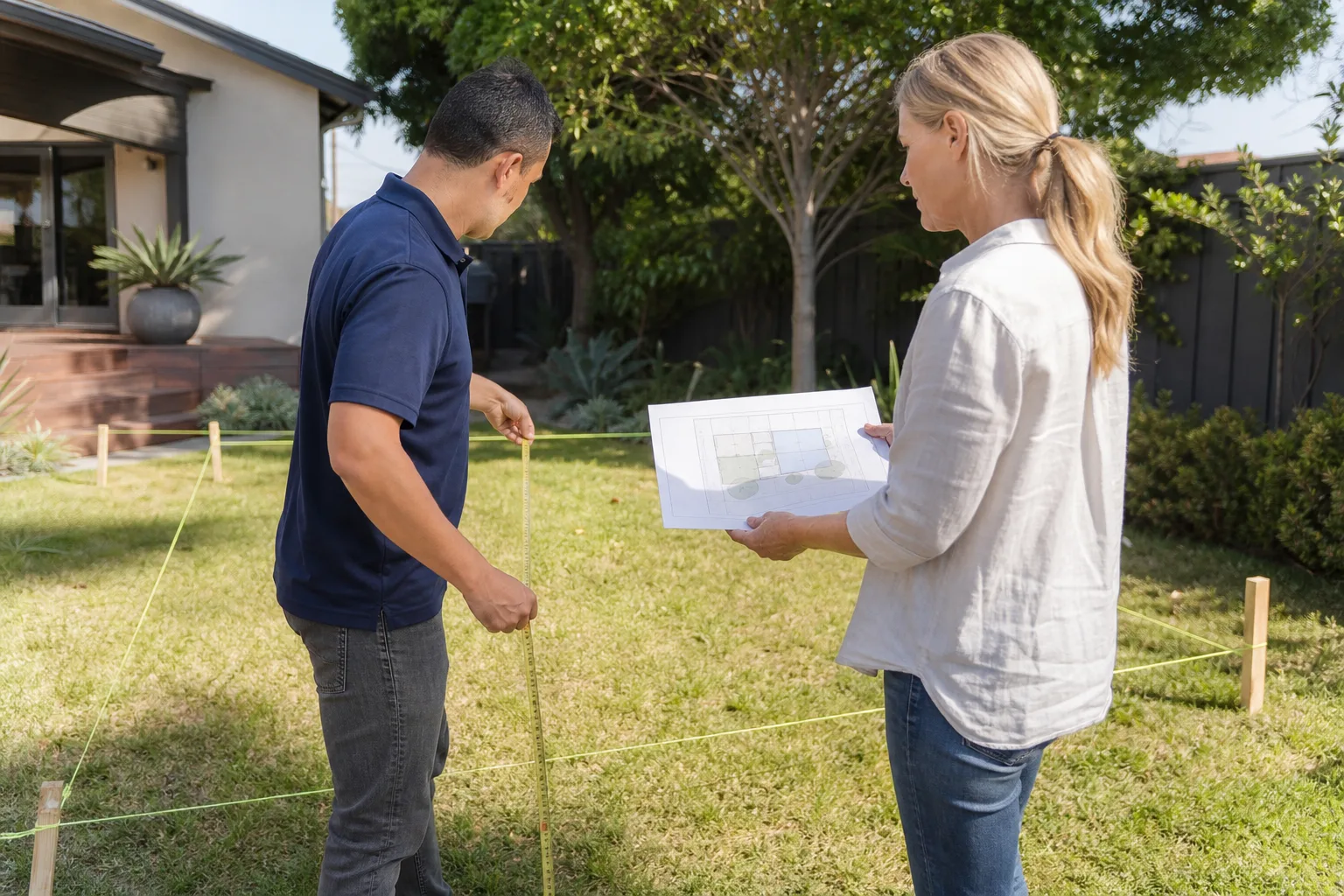
When we arrive to scope a job, we look for the model placard inside the shed or on the door frame. If it’s missing, we measure the floor framing spacing and check the skid dimensions. The Premier Pro uses a different floor system than the Pro Series, and mixing up foundation specs between them is a common and expensive mistake. On parts: Tuff Shed’s OEM floor joists, anchors, and utility penetrations are decent, but we regularly swap in locally sourced galvanized anchors and conduit rated for California’s damp-winter, dry-summer cycle. The aftermarket stuff we use is equal or better than OEM, and it costs less than paying freight and markup on Tuff Shed branded hardware.
Signs Your Tuff Shed Site Prep & Utilities Is Failing
- Doors stick, rub, or won’t latch. This usually means the shed has settled unevenly. In San Jose’s clay-heavy soil, we see this a lot after wet winters. The floor frame is no longer level, and the wall framing follows it.
- Standing water or a musty smell inside. Water pooling against the low side of the shed means the pad has sunk or was never graded with proper fall. A musty smell tells you water has been getting under the floor for a while.
- Visible cracks in a concrete slab. Hairline cracks are normal. A crack wider than a quarter inch that opens and closes with the seasons means the slab wasn’t poured on proper base rock or lacks the right control joints for our soil.
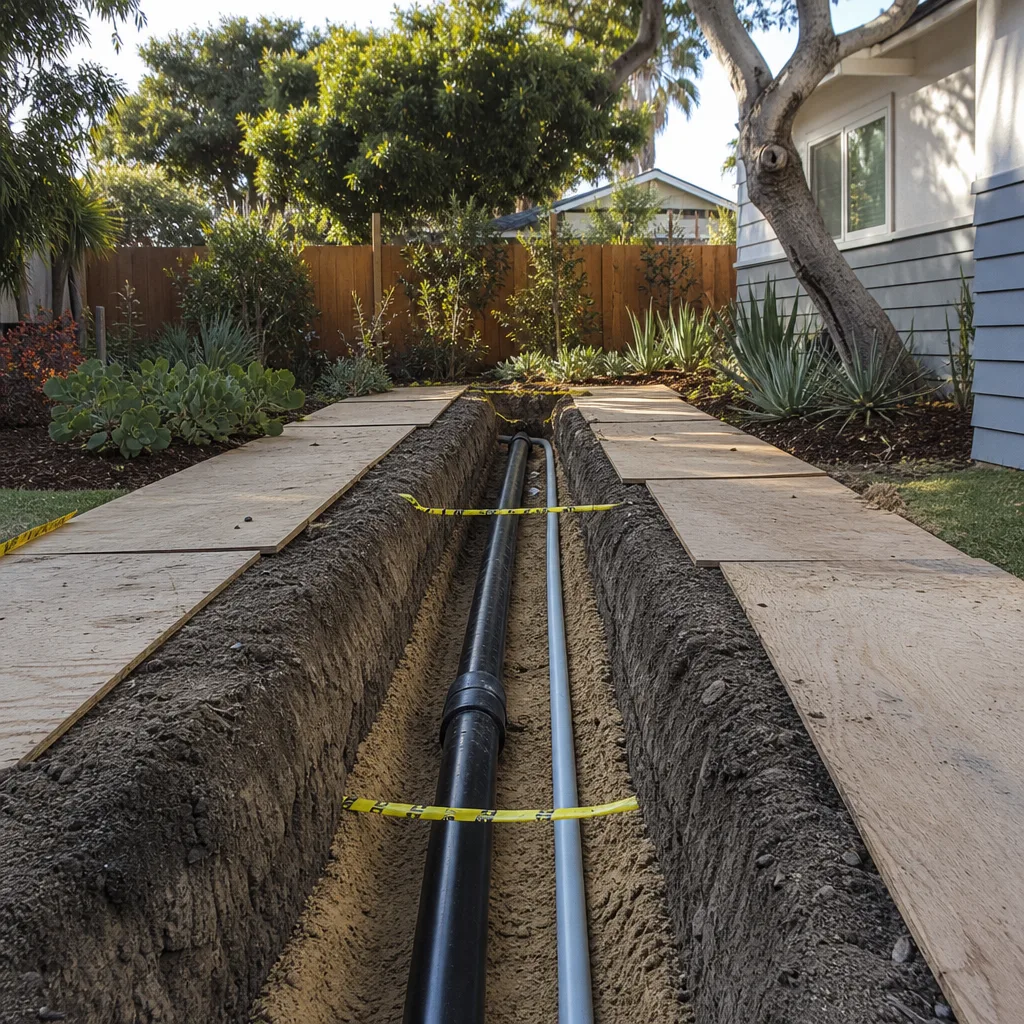
- Electrical outlets are dead or trip the breaker. This is often a utility trench that wasn’t done to depth, got nicked during grading, or used the wrong conduit for direct burial. It can also be a GFCI that was wired incorrectly at the panel.
- The shed has shifted off its anchors. Walk around and look at the anchor bolts at the base. If you see daylight between the floor frame and the anchor plate, the shed is moving. Left unaddressed, this gets worse every windstorm season.
Replacement Cost & What’s Included
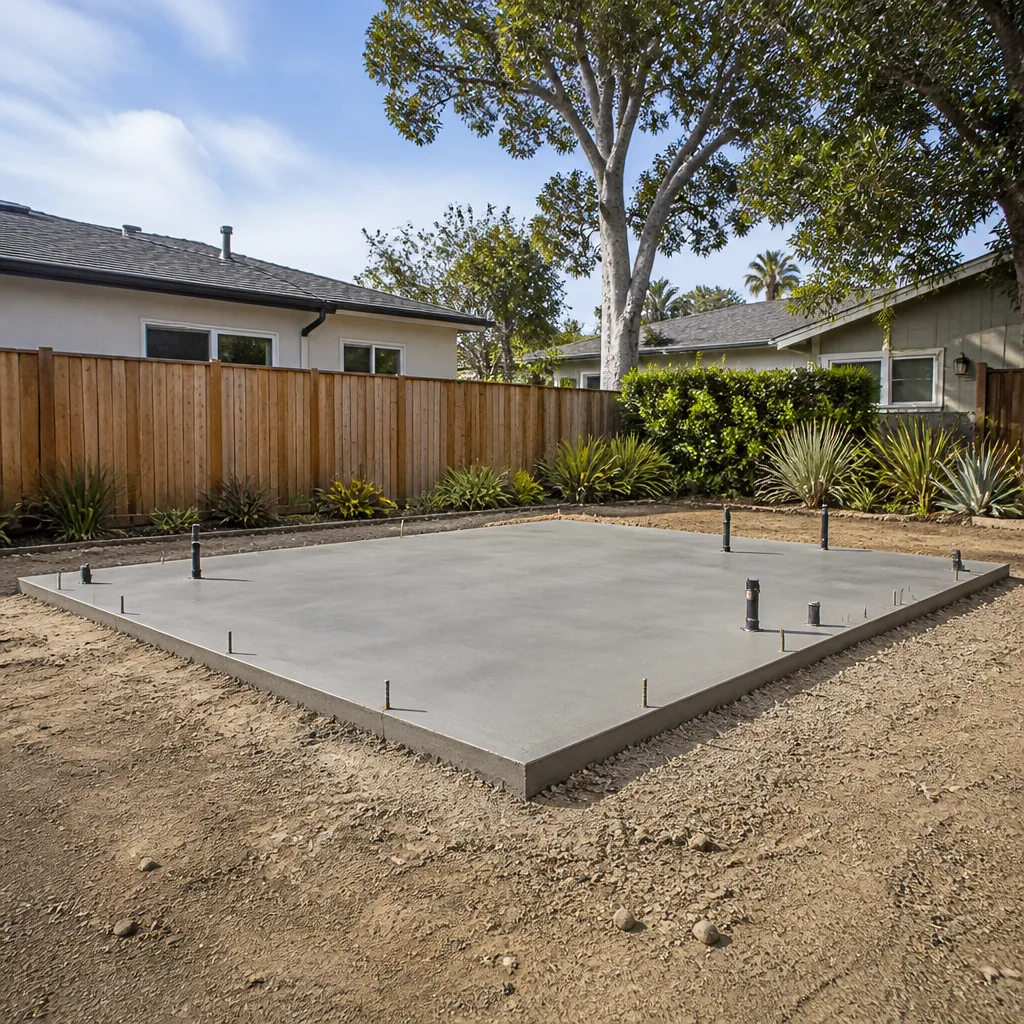
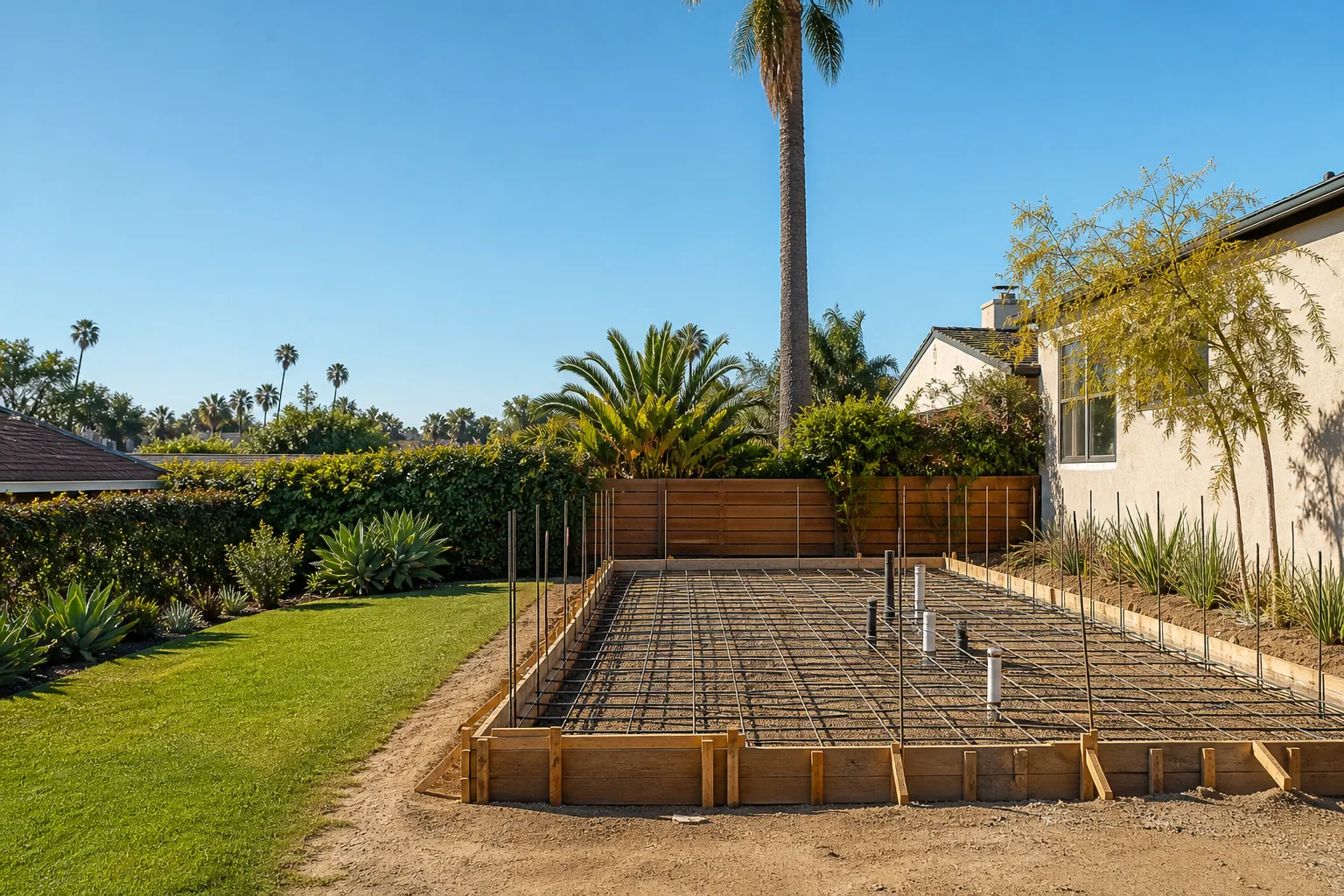
Here are real numbers for San Jose, so you don’t have to call just to get a ballpark. A gravel pad with compacted base rock and edge containment runs $1,800 to $3,200 for a typical 8×12 or 10×12 footprint. A poured concrete slab with rebar, proper base, and a smooth trowel finish runs $4,000 to $6,500 for that same footprint. Adding electrical rough-in, meaning conduit from your panel to the shed with a subpanel or a single 20-amp circuit, adds $1,200 to $3,000 depending on trench length and panel access.
| Work | Typical Range (San Jose) |
|---|---|
| Gravel pad, graded and compacted | $1,800 – $3,200 |
| Concrete slab, rebar and finish | $4,000 – $6,500 |
| Electrical rough-in (20A circuit, trench) | $1,200 – $3,000 |
| Slab repair / leveling (existing shed) | $1,500 – $4,500 |
Every quote includes the written line-item price before any work starts, the permit fee when one is required, and the 365-Day Done Right Promise in writing: if the site prep or utility work isn’t right, we come back and make it right, free, within the first year. That’s not a verbal assurance. It’s printed on the estimate and on the contract.
DIY or Call Us?
For site prep, there are a few things you can safely check yourself: look at the grading around the shed after a rain, check that anchor bolts are snug, and test the GFCI outlet on the inside wall. That’s about where DIY should stop. Pouring a slab that can carry a Tuff Shed for 20 years in San Jose soil isn’t a weekend project, and running electrical from your main panel involves trench depth, conduit spec, and a city inspection. If the trench is too shallow or the conduit is wrong, you’ve buried a problem that fails months later. If you’ve got a failed pad, shifting anchors, or dead utilities, call us at (669) 266-4319. We’ll tell you honestly what needs redoing and what can be salvaged.
FAQs
In San Jose’s climate, a correctly built gravel pad on compacted base rock typically lasts 10 to 15 years before it needs regrading, and a poured concrete slab with proper base and drainage can hold up for 20 to 30 years. The variable is soil movement: clay-heavy areas like parts of Willow Glen and Cambrian expand and contract more than sandy soils in other parts of the valley. Call (669) 266-4319 and we’ll tell you what your specific lot is dealing with.
Often, yes. If the shed has settled in one corner, we can sometimes jack and shim the floor frame, add compacted base, and get the doors working again for a fraction of a full replacement. If the slab is cracked beyond a certain point or the drains are shot, replacement is the honest answer. We’ll always price the repair first and replacement second, and you get both in writing.
Most gravel pad jobs are done in one day. A concrete slab takes three to five days when you count formwork, pour, and cure time before the shed can sit on it. Electrical rough-in runs one to two days on site, but the permit and inspection timing depends on the city of San Jose’s current workload, which can add a week or two to the calendar. We’ll give you a clear window in the written price.
We carry the common anchors, galvanized brackets, pressure-treated sill plates, conduit, outlet boxes, and compactable base rock needed for a standard Tuff Shed pad. For prefab-related work beyond Tuff Shed, we’re also familiar with Abodu, Cover, and Dvele site requirements. If we need something specific for your model, we’ll tell you and have it ordered before we start, with the cost on the written estimate.
Tell me what you were promised before, and I’ll tell you what we can actually deliver. That’s the way we open every site prep estimate in San Jose, because half the time we’re fixing work someone else walked away from. Call (669) 266-4319 today for your free, written site prep estimate. No price changes at the door, no vague hand-waving about scope. Just a number, a window, and a guarantee in writing.
Written by Russ Delmar, Owner, Lodgewick ADU San Jose at Lodgewick ADU San Jose, serving San Jose and nearby areas.