Last updated October 15, 2026
The Complete Guide to ADU in San Jose
San Jose issued more ADU permits in 2023 than any other city in Santa Clara County, yet the average homeowner still spends four months and talks to six contractors before breaking ground. Most of that delay is not about permits or financing; it is about indecision at the start. Homeowners collect bids before they have decided what they are actually building. This guide fixes the sequence. We will walk you through the three decisions that lock in 90% of your ADU cost and timeline before you ever hire anyone, along with San Jose-specific rules, real dollar ranges, and a week-by-week build timeline from first call to certificate of occupancy. For how to hire a ADU contractor in San Jose: a step-by-step guide, see our companion resource.
Quick Answer
Building an ADU in San Jose typically costs between $180,000 and $420,000 all-in for a detached unit in 2025 – 2026, and takes 8 to 14 months from first design conversation to move-in day. The three decisions that determine almost all of that cost are: what type of ADU you build, where exactly it sits on the lot, and how you connect it to utilities. Get those three decisions locked in writing before comparing contractor bids, and the rest of the project becomes a procurement exercise rather than a guessing game.
Table of Contents
- The Three ADU Types in San Jose – And Which One Fits Your Lot
- The Three Decisions That Lock in 90% of Your Cost
- What an ADU Actually Costs in San Jose in 2025 – 2026
- San Jose Permits, Fees, and the Rules Nobody Tells You About
- The Week-by-Week Timeline From First Call to Certificate of Occupancy
- How to Read an ADU Proposal and Spot a Vague Scope
- Prefab vs. Site-Built: The San Jose Reality
The Three ADU Types in San Jose – And Which One Fits Your Lot
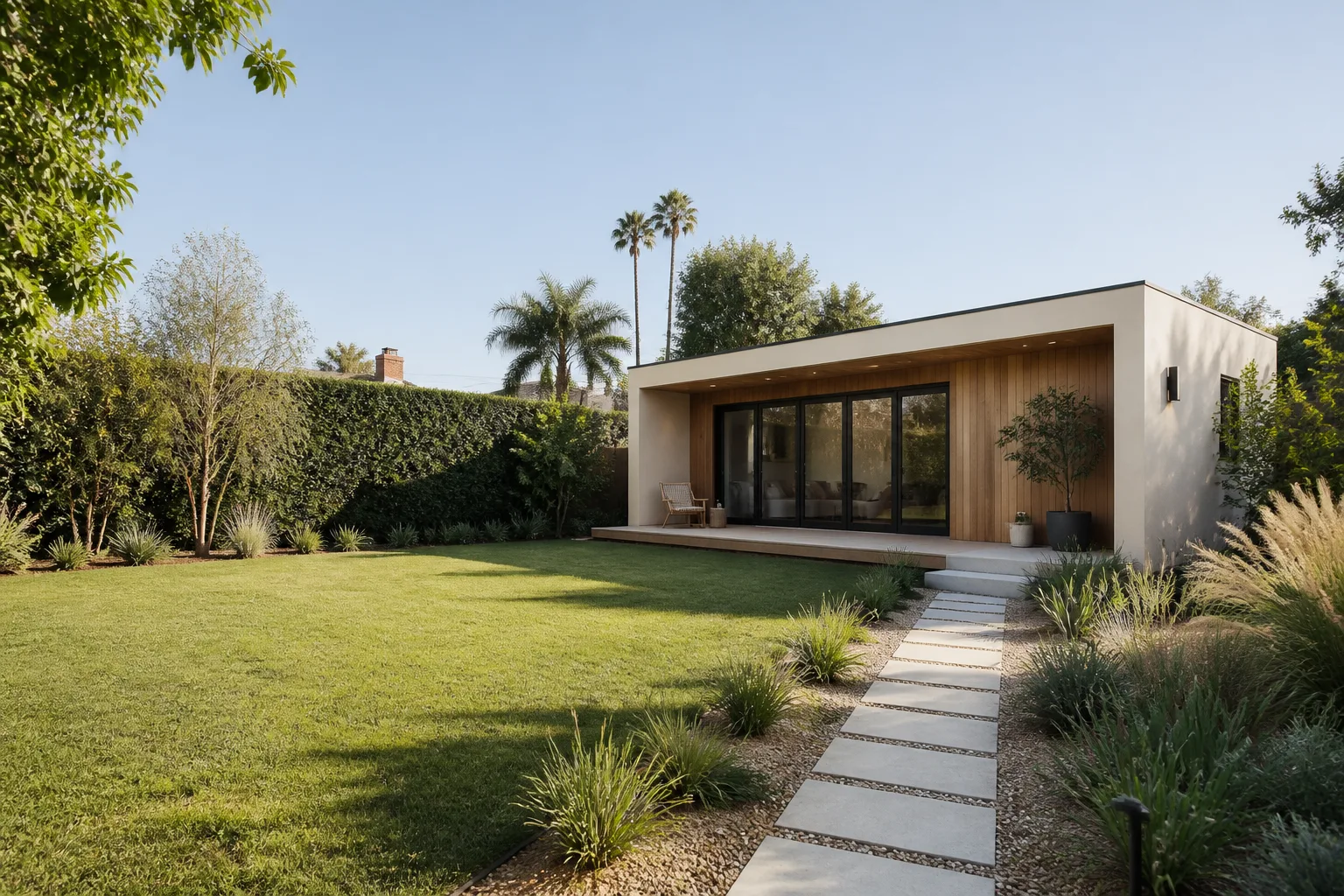
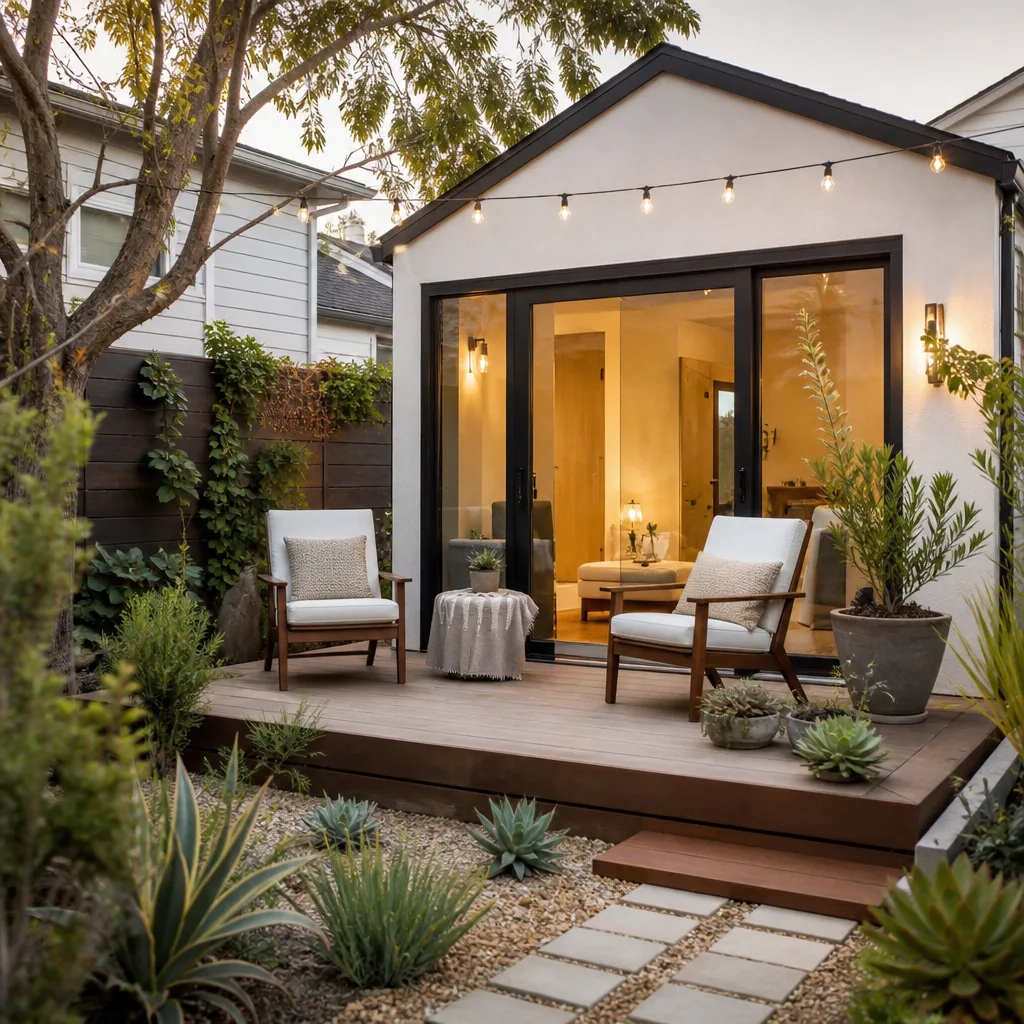
An accessory dwelling unit is a second, complete home on your existing residential lot with its own entrance, kitchen, bathroom, and sleeping area. A Junior ADU, or JADU, is a smaller version, up to 500 square feet, converted from existing space inside the main house, usually with a shared or efficiency kitchen. A garage conversion is exactly what it sounds like: turning an existing attached or detached garage into a livable dwelling. San Jose homeowners tend to choose based on their lot shape, their long-term family plans, and what the existing structure can support.
In neighborhoods like Willow Glen, Cambrian, and Almaden Valley, we see detached ADUs built in side yards and rear yards where the primary home sits toward the front of the lot. In older postal neighborhoods near downtown, such as Naglee Park and Japantown, attached conversions and interior JADUs are more common because lots are narrower, and the existing home footprint already consumes most of the buildable area.
Here is how the three choices break down in plain terms:
- Detached ADU: A separate structure in the backyard. Most flexible for rental income or multigenerational living because it has total privacy. Also the most expensive per square foot, typically $350 to $550 all-in per square foot in San Jose. Site placement matters enormously here; we will explain in the next section.
- Attached ADU: An addition to the main house with its own entrance. Costs less per square foot than detached, typically $250 to $400, because it shares at least one wall and can tie into existing utilities more easily. Great for aging parents who want proximity without losing independence.
- JADU or Garage Conversion: Converting existing space, typically $200 to $350 per square foot, but the final bill depends heavily on what is inside those walls: electrical panels, seismic bracing, sewer lines, and insulation. A garage conversion in San Jose built before 1980 often needs a full foundation upgrade; a garage built after 1990 typically does not.
Our Garage Conversion Contractor in San Jose page breaks down the conversion-specific costs and inspection realities in greater detail. Choose the ADU type before you call contractors for bids. The type determines the permit path, the design scope, and the realistic budget range. Bidding a detached unit against an attached addition is comparing apples to parking tickets.
The Three Decisions That Lock in 90% of Your Cost
Contractor negotiations matter less than homeowners think. Labor rates in the Bay Area are what they are, and honest builders are all working within the same material cost bands. What actually moves the needle are three decisions made before a contractor steps on the property: the ADU type, the site placement, and the utility connection strategy. Homeowners weighing DIY vs professional ADU: the San Jose homeowner’s decision guide often overlook this sequencing.
Decision 1: ADU Type. We covered this above. Here is the point that matters: deciding the type is a lifestyle and property decision, not a construction decision. A homeowner who wants rental income on a lot in Berryessa should not bid a garage conversion against a detached ADU. Decide first.
Decision 2: Site Placement. This is the silent budget killer. San Jose is a city of slightly sloped lots, and in neighborhoods like Evergreen and the eastern foothills, you may have a 2- to 4-foot grade change from front to back. A detached ADU placed 60 feet from the main house needs a separate sewer line run, and San Jose sewer laterals are not cheap. Placing the same ADU 20 feet from the main house can save $15,000 to $30,000 in trenching alone. In our experience, the difference between a smart placement and an arbitrary placement is the single largest controllable cost variable on a San Jose ADU project.
Decision 3: Utility Connection Strategy. Electricity, water, sewer, and gas. A detached ADU needs all four, and the way you connect them determines both cost and timeline. Tying into the main house’s existing panel may require a panel upgrade, which can run $4,000 to $12,000 in San Jose depending on the home’s current service. A separate PG&E service drop can avoid that, but it adds months of waiting, not weeks. Sewer connection distance, as mentioned, is the other big variable. Decide this strategy with a licensed contractor or designer before submitting any permit drawings. A San Jose homeowner who skips this step discovers they need a $22,000 sewer line run halfway through design review, and everything pauses.
If you are starting from zero, our ADU Builders in San Jose page explains how we walk those three decisions in a single site visit so the proposal you receive reflects what you actually need, not a generic template.
What an ADU Actually Costs in San Jose in 2025 – 2026
Let us stop being vague. Here are real dollar ranges for San Jose as of 2025 – 2026, including design, permits, impact fees, materials, labor, and inspection costs. These are all-in numbers, not builder line-items that later get padded with allowances and change orders.
| ADU Type | Typical Size | All-In Cost Range | Cost Per Sq Ft |
|---|---|---|---|
| JADU (interior conversion) | 250 – 500 sq ft | $70,000 – $130,000 | $280 – $400 |
| Garage Conversion | 400 – 600 sq ft | $110,000 – $190,000 | $275 – $380 |
| Attached ADU (addition) | 500 – 800 sq ft | $160,000 – $280,000 | $320 – $420 |
| Detached ADU (site-built) | 600 – 1,000 sq ft | $220,000 – $420,000 | $350 – $550 |
| Detached ADU (prefab) | 400 – 800 sq ft | $180,000 – $350,000 | $400 – $550 |
Here is what “all-in” actually includes in San Jose: design and structural engineering, Title 24 energy compliance, permit fees, school impact fees, city park fees, PG&E application fees, construction labor, materials, site prep, utility connections, and final inspection. It does not include optional upgrades like solar panels, upgraded appliance packages, or landscaping.
San Jose charges school impact fees on new dwelling units, and this surprises many homeowners. The current fee is roughly $4 to $5 per square foot for residential additions, though the City updates it regularly. A 600-square-foot detached ADU can carry $2,500 to $3,000 in school fees alone. Park fees and building permit fees add another $8,000 to $15,000 depending on the project valuation. These are not optional, and a contractor who omits them from a proposal is not doing you a favor; they are setting up a change order. We put every one of these in the written price before work begins, because the alternative is a homeowner discovering $12,000 in surprise fees after demolition starts. Our home addition contractor maintenance checklist for San Jose homeowners covers how to verify these line items.
If you are considering a larger project beyond the ADU itself, Home Addition Contractor in San Jose has related cost breakdowns for attached additions and garages.
San Jose Permits, Fees, and the Rules Nobody Tells You About
San Jose follows the California statewide ADU regulations, which are generous by design. But several local rules catch homeowners off guard. Here are the rules in plain English, with the caveat that you should always confirm current ordinances with the City of San Jose’s Planning Division before signing a construction contract. Municipal codes change.
- Owner-occupancy requirement. Under current California law, the owner-occupancy restriction for ADUs is suspended until January 1, 2030. This means you can build an ADU on a San Jose property and rent out both the main house and the ADU without living on site. Many homeowners do not know this and assume they must occupy one of the two units. That assumption can change the entire financial picture.
- Setbacks. A detached ADU in San Jose can be as close as 4 feet to the rear and side property lines, regardless of the primary home’s setback requirements. Attached ADUs follow the same setback as the main dwelling. This 4-foot rule is huge for narrow lots where a backyard retreat used to be the only option.
- Height limits. A detached ADU can be up to 16 feet tall on a standard lot, and up to 18 feet if within one-half mile of a major transit stop. In practice, most San Jose single-story ADUs are 12 to 14 feet tall, leaving room for attic storage or a small loft without triggering additional design review.
- Parking. San Jose does not require additional parking for an ADU if the property is within one-half mile of a public transit stop, or if the ADU is a garage conversion that removes an existing parking space (the state prohibits cities from requiring replacement parking in that case). For most San Jose homeowners, parking requirements are effectively waived or easy to satisfy.
- Fire sprinklers. San Jose does not require fire sprinklers in an ADU if the primary home does not have them. This saves $3,000 to $6,000 compared with jurisdictions like Los Angeles. If the primary residence is already sprinklered, the ADU must be sprinklered too.
- Utility connection. A detached ADU needs its own water and sewer connections unless the City approves a shared line. This is where placement decisions from the earlier section come back into play. A sewer lateral run across a 75-foot yard in Almaden Valley is a materially different cost than a 15-foot run in Willow Glen.
The Week-by-Week Timeline From First Call to Certificate of Occupancy
Here is a realistic timeline for a detached ADU in San Jose, based on projects we have completed and projects underway in 2025. This assumes you make the three decisions from the earlier section in the first two weeks rather than dragging them out across three months of contractor bidding.
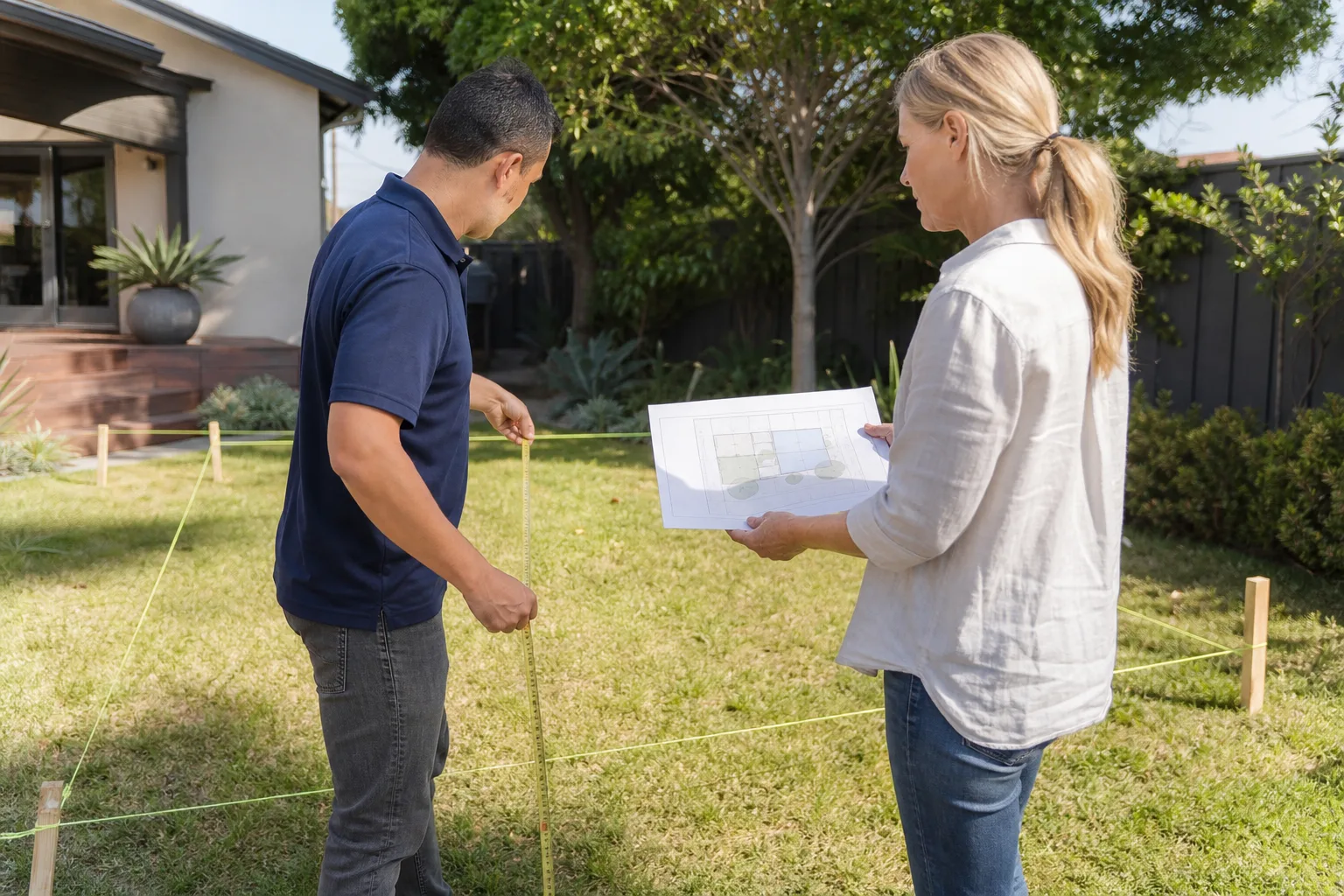
- Weeks 1 – 2: Site visit and scope decision. A builder or designer walks your lot, reviews your utility access, takes measurements, and confirms the ADU type and placement. You decide on the three decision points. If you have not made those decisions yet, this phase stretches indefinitely.
- Weeks 3 – 8: Design and engineering. Architectural drawings, structural calculations, Title 24 energy compliance, and site plans. Keep in mind that any change after this point costs real money in re-engineering.
- Weeks 9 – 12: Permit submission and review. San Jose’s online permit portal accepts digital drawings. The City’s current review turnaround for ADU permits is typically 6 to 10 weeks for a standard over-the-counter submittal, though some projects with unusual lot conditions take longer.
- Weeks 13 – 16: Permit approval and impact fee payment. You pay school fees, park fees, and building permit fees. This is when ordering of long-lead materials begins.
- Weeks 17 – 24: Site work and foundation. Excavation, grading, foundation forms, concrete pour, and underground utility rough-in. San Jose’s clay-heavy soil in the eastern foothills can require deeper footings than the flatter central basin neighborhoods.
- Weeks 25 – 36: Framing, roofing, and weatherproofing. The structure goes up. This is the fastest visible phase and usually runs on schedule if materials were ordered during the permit phase.
- Weeks 37 – 44: Mechanical, plumbing, and electrical rough-in. Utility connections are made, inspections occur, and any panel upgrades are completed.
- Weeks 45 – 52: Interior finish work. Drywall, paint, cabinetry, flooring, fixtures, and appliances. This phase can overshoot if the homeowner changes finishes mid-stream. Decide your finishes early and hold the line.
- Weeks 53 – 56: Final inspections and certificate of occupancy. San Jose’s Building Division issues the certificate once all final inspections pass. You can legally rent or occupy the ADU from this date.
Total: 12 to 14 months for a site-built detached ADU. A garage conversion or JADU can run 6 to 9 months depending on structural conditions. A prefab unit from a manufacturer like Boxabl or Mighty Buildings can compress the on-site timeline substantially because much of the construction happens off-site, though the permitting and utility connection phases still take roughly the same amount of time.
How to Read an ADU Proposal and Spot a Vague Scope
Every ADU proposal breaks into two halves: the scope of work and the schedule of values. The scope of work is the written description of what the contractor will do. The schedule of values is the line-item breakdown of what each phase costs. A proposal that lacks one of these is not a proposal; it is a conversation starter with a number attached.
When you sit down with a San Jose contractor’s proposal, look for these five red flags immediately:
- “Allowance” listed as a line item. An allowance is money the contractor sets aside for materials they have not priced yet. A $20,000 “allowance” for cabinetry means they have not picked the cabinets, have not priced the cabinets, and are guessing. If the contractor later says the cabinets cost $28,000, that is a change order. A written price from us means the number in the proposal is the number you pay, not a wish list.
- No line items for permits, fees, or utilities. This is the most common omission we see in San Jose. A proposal that says “Permits: TBD” or omits sewer connection entirely is leaving $15,000 to $35,000 of unstated cost on the table.
- Vague language about cleanup or site preparation. “Site to be left in reasonable condition” is not a commitment. The Kingswell Way says the price before the work, the window for arrival, and the site cleaned better than we found it. If a proposal cannot say that in writing, keep looking.
- No warranty or guarantee language. If the proposal does not include a written guarantee, you will have no lever when a leak appears four months after completion and the contractor does not answer the phone. A proposal without a written guarantee is an invitation to pay twice.
- No defined schedule or contingencies. “Timeline will be discussed” means the timeline will slip. A serious proposal puts weeks next to phases, even if those weeks shift for weather or inspections.
The 365-Day Done Right Promise is the written guarantee we issue on every project before work begins. If the work is not done right, we come back and make it right, and that commitment is in writing. No contractor can promise perfection on a construction site, but every contractor can put their quality commitment in writing. Most refuse. We do not.
Prefab vs. Site-Built: The San Jose Reality
Prefab ADU manufacturers have gotten very good. Brands like Boxabl, Plant Prefab, and Mighty Buildings are producing units that arrive on a truck and get set onto a prepared foundation in days, not months. San Jose homeowners are increasingly asking about this route, and for good reason: off-site construction means fewer weather delays, tighter quality control, and a cleaner job site because most of the sawing and nailing happens in a factory.
But prefab is not a shortcut around San Jose’s permit process. You still need the same permits, the same impact fees, the same utility connections, and the same foundation work. What prefab changes is the framing and finish assembly phase, which compresses from 8 to 12 weeks down to 2 to 4 weeks of on-site time. The savings are primarily in time, not dollars. In fact, high-end prefab units from Plant Prefab can cost more per square foot than a comparable site-built unit because the factory quality and materials are excellent.
Our guidance: if your priority is speed and you have a straightforward lot with easy crane access, prefab is worth evaluating. Mighty Buildings and Boxabl both offer models that work well on flat central San Jose lots. If your lot has steep grade changes, narrow side access, or unusual utility constraints, a site-built unit often makes more sense because the design flexes around the site rather than the site having to flex around the unit.
We work with several prefab manufacturers directly, including Boxabl and Plant Prefab and Mighty Buildings, and we are also comfortable with conventional site-built framing. The choice should be driven by your lot and your priorities, not by a contractor’s preference for one route over the other. Lodgewick ADU San Jose home has details on how our team evaluates both options during the initial site visit.
Common Mistakes to Avoid
- Bidding before deciding. Collecting bids from six contractors before you have decided on ADU type, placement, and utility strategy is the most expensive mistake in the whole process. You will compare six different scopes and learn nothing. Decide first, then bid.
- Ignoring sewer line distance. In San Jose’s older neighborhoods, sewer laterals run in unpredictable directions. Placing your ADU too far from the existing line can add $20,000 or more in trenching costs. A builder who evaluates this on the first site visit is worth their weight.
- Underestimating PG&E timelines. A panel upgrade or new service connection in San Jose can take 2 to 4 months just for PG&E to schedule the work. If you wait until framing starts to file the application, your project stalls.
- Choosing the lowest bid without checking scope. A proposal that omits permit fees, school fees, and utility connections will always look cheaper. When those costs surface later as change orders, the lowest bid becomes the highest final price.
- Changing finishes mid-build. Every change order during finish work costs three things: the material difference, the labor to redo already-completed work, and the calendar time lost. Decide your finishes before the drywall goes up, and do not waver.
- Skipping the written guarantee. Construction projects have post-completion issues. A written guarantee is the only thing standing between you and an unreturned phone call when something goes wrong. Never sign a contract without one.
When to Call a Professional
You need a professional when you are ready to move from thinking to deciding: when you want a real site evaluation that tells you what your lot can support, what the utility connections will cost, and what your actual all-in budget should be. If you are still in the “maybe someday” phase, read through this guide again and circle the ADU type that fits your family’s situation, or browse more guides & resources to keep learning. If you are in the “we want this done” phase, the next step is a site visit with someone who will give you a written price before any work starts, not a range with fifteen asterisks. Lodgewick ADU San Jose offers free estimates in San Jose – call (669) 266-4319 and a live person will answer, not a voicemail.
Frequently Asked Questions
An ADU in San Jose costs between $70,000 and $420,000 all-in depending on the type, size, and site conditions, with a typical detached unit landing between $220,000 and $350,000 in 2025 – 2026. That range includes design, permits, impact fees, materials, labor, and utility connections. Call (669) 266-4319 to schedule a free estimate on your specific lot.
No. California’s owner-occupancy requirement for ADUs is suspended until January 1, 2030, so you can build an ADU on a San Jose property and rent out both units without living on site. This rule changes periodically, so confirm with the City of San Jose before finalizing your plans.
Yes, and San Jose’s rules are favorable: the City cannot require you to replace parking lost to a garage conversion, and you can build the ADU within 4 feet of property lines in most cases. The structural condition of your existing garage determines whether the conversion is a straightforward remodel or a more involved foundation replacement.
A site-built detached ADU takes 12 to 14 months from first call to certificate of occupancy. A garage conversion or JADU typically takes 6 to 9 months. Prefab units can compress the on-site construction phase, but the permitting and utility connection timeline remains similar.
Sewer line distance from the main house, electrical panel upgrades, PG&E connection fees, and school impact fees are the four most common budget surprises. These can add $15,000 to $40,000 beyond the base construction cost. The written price from Lodgewick ADU San Jose includes these items before work begins, so there are no surprises at the door.
Yes. Prefab ADUs from manufacturers like Boxabl or Mighty Buildings still require the same building permits, impact fees, foundation work, and utility connections as site-built units. The prefab route changes the construction phase, not the regulatory phase. Call (669) 266-4319 for a free estimate that compares both options for your lot.
The Bottom Line
Building an ADU in San Jose is not complicated once you understand what actually drives cost and time. The ADU type, the site placement, and the utility connection strategy are the three decisions that matter most, and they are all decides you can make in a single informed site visit. Everything after that is execution: permits, fees, materials, and weeks on the calendar. If you are done collecting bids and ready to build, call (669) 266-4319 for a free estimate from Lodgewick ADU San Jose. We will put the price in writing before any work starts, and we will put the guarantee in writing on the same day.
Written by Russ Delmar, Owner at Lodgewick ADU San Jose, serving San Jose since 2010.