Last updated October 15, 2026
DIY vs Professional ADU: The San Jose Homeowner’s Decision Guide
California lets homeowners pull their own building permit and act as their own general contractor on an ADU. What most San Jose homeowners don’t learn until it’s too late: pull that owner-builder permit and you cannot sell your house for five years without disclosing the owner-built status to the next buyer. That single fact reshapes the entire DIY-versus-hire conversation before you swing a hammer. This guide and our more guides & resources walk you through the legal line between what you’re allowed to touch and what triggers liability, failed inspections, or a lender rejecting your refinance. We’ll give you real San Jose cost numbers, the insurance gap most people miss, and a hybrid path that saves money without gambling the resale value of your home.
Quick Answer
For most San Jose homeowners, the smartest path is a hybrid: hire a licensed contractor for the permitted structural, electrical, plumbing, and mechanical work, then do finish work yourself where California code allows. Pure DIY on an ADU means accepting the legal consequences of owner-builder status, including a five-year resale disclosure, potential refinance complications, and full liability for anyone injured on your property during construction. A fully contracted ADU build in San Jose typically runs $350,000 to $550,000 for a 500-750 square foot unit; owner-builder projects save 15-25% on paper but often give back most of that savings in mistakes, re-inspections, and your own unpaid labor. See our Home Addition Contractor Maintenance Checklist for San Jose Homeowners for what ongoing upkeep looks like after the build.
Table of Contents
- What an Owner-Builder Legally Is in California
- The Five-Year Resale Disclosure and How Lenders Treat Owner-Built ADUs
- What You Can Legally DIY vs. What Requires a Licensed Subcontractor
- Real Cost Comparison: Owner-Builder vs. Fully Contracted ADU in San Jose
- The Hidden Costs of Owner-Builder Projects Nobody Budgets For
- The Hybrid Model: How to Do It Cleanly and What Your Contract Must Say
- The Insurance Gap: What Your Policy Covers vs. What a GC’s Policy Covers
- Common Mistakes to Avoid
- When to Call a Professional
- Frequently Asked Questions
- The Bottom Line
What an Owner-Builder Legally Is in California
In California, an owner-builder is a homeowner who pulls a building permit in their own name and takes on the legal responsibilities of a general contractor without holding a contractor’s license. The state allows this for residential projects, including ADUs, under Business and Professions Code Section 7044. But the definition matters more than most people realize. When you sign that permit application, you are declaring under penalty of perjury that you are personally performing the work, directly supervising hired workers, or both. You are not hiring a GC who happens to let you sign the paperwork. You are the GC in the eyes of the city, the state, the insurance company, and every subcontractor on site.
This has concrete downstream consequences in San Jose. The city’s permit intake staff will ask whether the permit is owner-builder or licensed-contractor. That answer determines who can legally do the work, who pulls the subcontractor permits for electrical and plumbing, and who is named in any enforcement action if something goes wrong. We’ve seen owners caught off guard when a subcontractor places a mechanic’s lien on the property after the owner-builder failed to issue a proper notice or didn’t track payments. A licensed home addition contractor in San Jose carries the legal and administrative layer that an owner-builder must handle themselves, often without knowing what they don’t know.
Owner-builder rules also affect workers’ compensation. If you hire someone to help and that person is not a licensed subcontractor with their own coverage, you are likely operating as their employer in the eyes of California’s Division of Workers’ Compensation. That means if they get hurt, you could be personally liable for medical costs and lost wages, and the state can file a stop order on your project. Even for licensed subs, an owner-builder is expected to verify each one carries a current license, active workers’ comp, and, in many cases, liability coverage. Skipping that verification does not protect you; it deepens the hole.
Here’s what changes the moment you become an owner-builder on an ADU in San Jose:
- You, not a contractor, are the named party on the permit. If the City of San Jose issues a correction or a stop-work notice, it comes to you.
- You assume full civil liability for construction defects. A future buyer who finds a framing or waterproofing problem in year two or year three can pursue you personally in a way they could not pursue a licensed GC with a bond and insurance.
- You must handle project oversight, scheduling, and inspections. San Jose has specific inspection requirements for ADU footings, framing, electrical, plumbing, and finals. Each one requires you or your designated agent to be present at times the city schedules, not always at your convenience.
- You assume responsibility for jobsite safety. Falls, trenching accidents, electrical contact, and other construction hazards become your legal problem in ways a homeowner hiring a licensed GC would not bear.
None of this makes owner-builder illegal, and plenty of capable San Jose homeowners have built fine ADUs this way. But the legal definition is not a formality. It is a transfer of risk from a licensed professional to you.
The Five-Year Resale Disclosure and How Lenders Treat Owner-Built ADUs
The most surprising owner-builder rule, and the one that changes most San Jose homeowners’ decisions, is the resale restriction. Under California law, if you sell a home with an owner-built structure within five years of completion, you must disclose in writing that the structure was owner-built. That disclosure requirement, combined with California’s already strict transfer disclosure laws, tends to make buyers hesitant and lenders slow to approve financing on the property.
Why the hesitation from lenders? Underwriting standards treat owner-built work as riskier than contractor-built work. A licensed contractor carries a contractor’s bond and typically provides a workmanship warranty. An owner-builder offers no bond, no contractor license to review, and the quality of the work varies enormously from one owner to the next. When a buyer applies for a mortgage on a home with a recent owner-built ADU, the lender often requires additional documentation: the original permit package, proof of final sign-off, a structural inspection, and sometimes a retroactive warranty policy. We’ve heard from San Jose homeowners who thought their ADU added $150,000 of value at listing, only to watch buyers retreat when the owner-builder disclosure surfaced.
Refinancing presents a related problem. If you built your ADU as an owner-builder and later want to pull equity out via a cash-out refinance, the lender’s appraiser will note the ADU. The underwriter may then ask for the same documentation a purchase lender would request. If your final inspection was closed cleanly and you kept every record, you might clear the hurdle. If the ADU was finished without a final sign-off, or if the permit was left open, or if the appraiser notes quality concerns, the refinance can fail outright or get repriced at a higher rate. For many San Jose homeowners, the refinance question alone justifies hiring a licensed contractor.
There is also the disclosure mechanics to understand. The five-year clock runs from the date of completion, usually the date of final inspection sign-off. The disclosure must be made in the sale contract or the transfer disclosure statement. You cannot avoid it by selling before the ADU is what a buyer would call “complete”; the permit history remains a matter of public record with the City of San Jose. A competent buyer’s agent will pull the permit history and notice that the ADU was built under an owner-builder permit.
One more thing lenders look at: whether all subcontractors and material suppliers were paid. Owner-builder projects generate a higher rate of mechanic’s lien claims, largely because owners do not manage California’s preliminary notice and lien release processes the way a licensed GC does. A single unpaid supplier can place a lien that stalls a sale or refinance for months. Lenders do not close over open liens. This is precisely where a professional ADU builder in San Jose manages the administrative heat that owners rarely anticipate.
What You Can Legally DIY vs. What Requires a Licensed Subcontractor
The real question under California law is not whether you have the skill to frame a wall. It’s which scopes of work the state and the City of San Jose require a licensed contractor to perform, and which scopes you are permitted to handle yourself under an owner-builder permit. Here is the line, drawn plainly.
Work that requires a licensed contractor by law:
- Electrical work beyond basic fixture replacement. Wiring a new ADU panel, running circuits, installing outlets and switches, and connecting to the main service all require a C-10 electrical contractor license. The City of San Jose will not sign off electrical rough-in or final without a licensed electrician named on the permit.
- Plumbing, drain, and gas line work. Running a new sewer lateral, tying into the main drain, installing gas lines for a tankless water heater or range, and setting fixtures all require a C-36 plumbing contractor. Gas work especially cannot be owner-performed; a leak in a San Jose home is a life-safety issue and an inspection failure.
- HVAC and mechanical systems. Installing a mini-split, ductwork, or a whole-home ventilation system requires a C-20 HVAC license. It also requires Title 24 energy compliance documentation.
- Structural framing and foundation work, unless you are doing it yourself and it is your own residence. Even then, San Jose’s structural plan review is stringent, and seismic requirements are not friendly to amateurs.
Work a homeowner may legally perform under an owner-builder permit:
- Finish carpentry: baseboards, door and window casing, closet shelves, and trim.
- Paint, both interior and exterior.
- Insulation installation in accessible cavities, though San Jose’s Title 24 energy check will verify the installed R-value.
- Flooring: laminate, tile, vinyl plank, and carpet.
- Drywall hanging and finishing, though this is where many owners burn weeks of time.
- Landscaping, irrigation, and site drainage outside the building envelope.
- Fixture installation after rough-in: faucets, shower trim, light fixtures, towel bars, and cabinet hardware.
- Cabinet assembly and installation, including prefabricated kitchen and bath cabinetry.
What surprises most San Jose homeowners: you can pull the owner-builder permit and then hire licensed subcontractors directly for every trade, which is legal and common. The owner-builder status does not require you to swing a hammer at all. It just means you carry the general contractor’s risk without the license, the bond, or the leverage that a licensed GC has with subs and inspectors.
Real Cost Comparison: Owner-Builder vs. Fully Contracted ADU in San Jose
Let’s put real numbers on the table. These are San Jose ranges in 2025 dollars for a 500 to 750 square foot one-bedroom or two-bedroom ADU built to current California code, including permits and connection fees. The low end assumes a straightforward detached unit on a flat lot with good access; the high end assumes a hillside lot, trenching for a new sewer lateral, or upgraded finishes.
Fully Contracted ADU in San Jose
- Design and engineering: $18,000 to $35,000. Structural drawings, Title 24 energy calculations, and site plan. Some turnkey builders bundle this.
- San Jose permit fees and development impact fees: $12,000 to $30,000. School fees, park fees, and building permit fees vary by size and location. San Jose has reduced certain ADU impact fees, but the total is rarely zero.
- Site work and foundation: $35,000 to $80,000. Clearing, excavation, concrete slab or raised foundation, drainage.
- Framing, roofing, and exterior: $70,000 to $140,000. Lumber, labor, roof system, siding, windows, exterior doors. James Hardie siding is common in San Jose and holds up well to the dry summers.
- Electrical, plumbing, and mechanical: $45,000 to $90,000. New subpanel or panel upgrade, sewer tie-in, gas lines, mini-split HVAC, tankless water heater.
- Interior finishes: $60,000 to $120,000. Drywall, paint, flooring, kitchen cabinets, bathroom fixtures, lighting, doors, trim.
- General contractor margin and overhead: 15-20% of hard costs, typically $60,000 to $100,000.
- Contingency for surprises: 5-10% of hard costs, typically $25,000 to $50,000. San Jose lots hide old sewer lines, tree roots, and undocumented fill.
Realistic total: $350,000 to $550,000.
Owner-Builder ADU in San Jose
- Design and engineering: Same, $18,000 to $35,000.
- Permit fees: Same, $12,000 to $30,000.
- Site work and foundation: $35,000 to $80,000. You can save by doing some hand labor, but concrete and excavation still require licensed or experienced crews.
- Framing, roofing, and exterior: $75,000 to $150,000, unless you have genuine carpentry skill and months of free time. Owner-builders rarely beat contractor pricing on framing because they lack volume discounts on lumber packages.
- Electrical, plumbing, HVAC: $50,000 to $95,000. You must hire licensed subs. You may pay slightly more per sub because you offer no repeat-work relationship and subs price one-off owner work defensively.
- Interior finishes: $40,000 to $80,000 if you genuinely do all finish work yourself. This is where real owner-builder savings happen.
- GC margin: $0 on paper. Real cost: your time, mistakes, rework, and re-inspections.
- Contingency for surprises: Higher, not lower: $30,000 to $60,000, because owner-builders lack the systems a GC uses to catch problems before they become change orders.
Realistic total: $290,000 to $480,000.
On paper, the owner-builder path saves $60,000 to $70,000 on a mid-size ADU in San Jose. In practice, we’ve watched owners give most of that back in schedule overruns, re-inspections, and correction work. That is the honest math.
The Hidden Costs of Owner-Builder Projects Nobody Budgets For
The line-item budget never tells the full story. Here are the real costs that show up on owner-builder ADU projects in San Jose, in order of how often we see them.
- Your own time, unpriced. A licensed GC’s project manager spends 15 to 25 hours per week on scheduling, inspections, material orders, and punch-list management during an active build. That is now your job. Four months of that is 250 to 400 hours. Price your own hours at even $50 and the GC margin starts looking justified.
- Mistakes discovered at inspection. San Jose inspectors do not teach. They cite. A failed footing inspection means fixing the rebar layout and paying for another inspection visit. A failed framing inspection often means revisiting a dozen details. Each re-inspection in San Jose carries a fee, and each delay pushes your schedule weeks outward because inspectors are booking days out.
- Permit extensions. Owner-builder ADU permits expire like any other building permit. If you run out of money, time, or momentum mid-project, the City of San Jose will require a permit extension or a reactivation fee. Multiple extensions are common on owner-builder jobs.
- Material waste and rework. Licensed GCs order materials to plan, often with negotiated pricing on lumber packages, drywall, and fixtures. Owner-builders buy retail and make more ordering mistakes: the wrong window size, the wrong door swing, the wrong drywall thickness. Every mistake is a restock fee or a second trip.
- Subcontractor pricing premium. This one hurts because it is invisible. When a licensed GC calls an electrician for a 600-square-foot ADU rough-in, that electrician prices the job knowing there will be a next one. When you call as an owner-builder, you get a one-off price that often runs 10 to 20 percent higher. Subs also protect themselves with tighter scopes and unforgiving change orders.
- Financing friction. Most San Jose homeowners build ADUs with a HELOC, a cash-out refinance, or a construction loan. Construction loans in particular often require a licensed general contractor as a condition of funding. If you are owner-building, you may be forced into shorter-term, higher-cost financing or out of construction lending entirely. And if the build stalls, your existing HELOC payments continue while the ADU generates no income and no added value.
- Warranty work you will perform forever. A licensed GC offers a workmanship warranty, typically one year or more, and in the case of certain San Jose ADU builders, a written guarantee that runs longer. An owner-builder has no one to call when a window leaks or a door binds. You are the warranty department.
One San Jose-specific factor: the city sits in a PG&E service area, and PG&E’s timelines for new service connections and panel upgrades have run months at times. A licensed GC with an established relationship and experience navigating PG&E’s process can often sequence that work early and keep it from becoming the long pole in the schedule. An owner-builder discovers the PG&E delay at the worst possible moment, usually after the ADU is framed and waiting for power.
The Hybrid Model: How to Do It Cleanly and What Your Contract Must Say
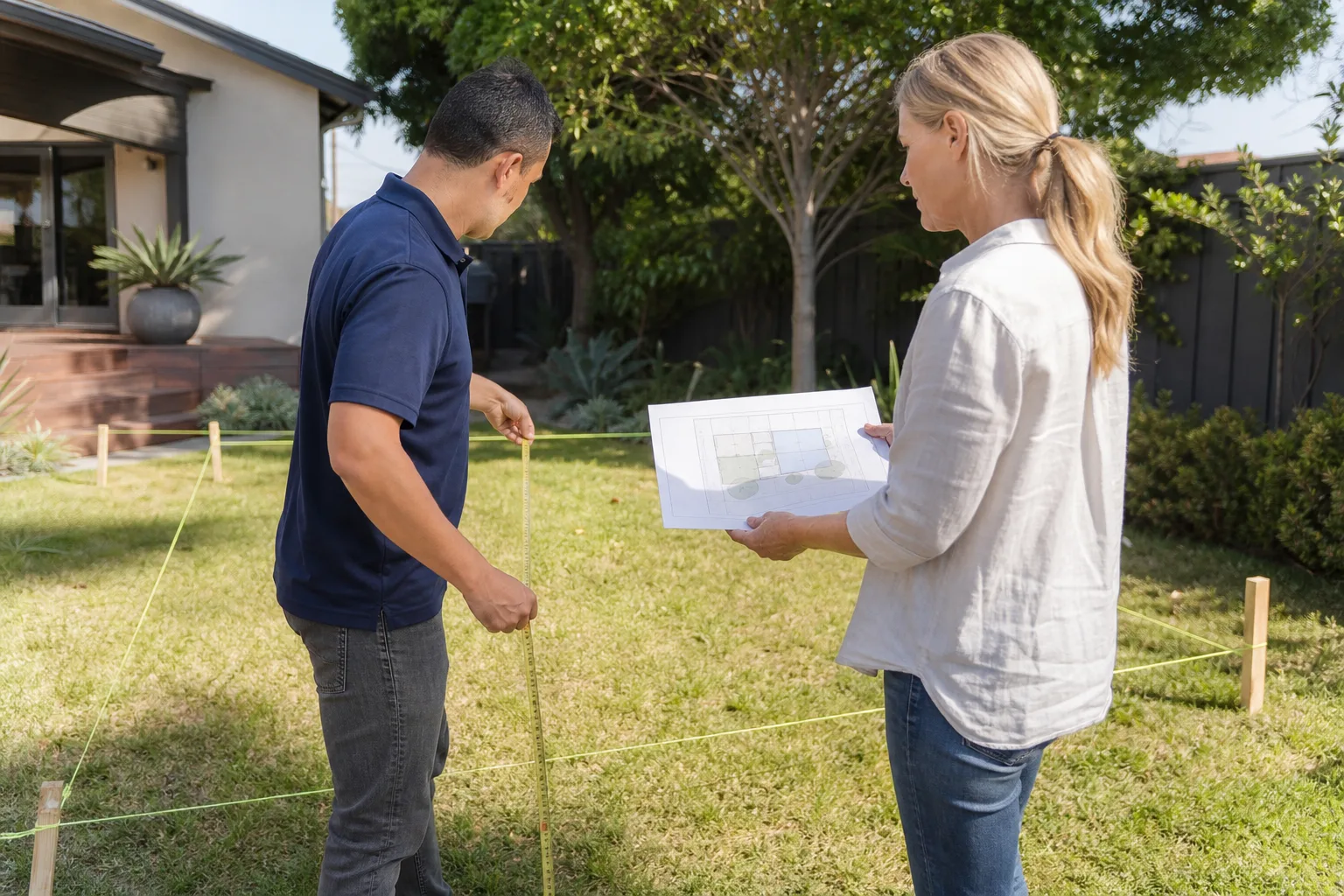
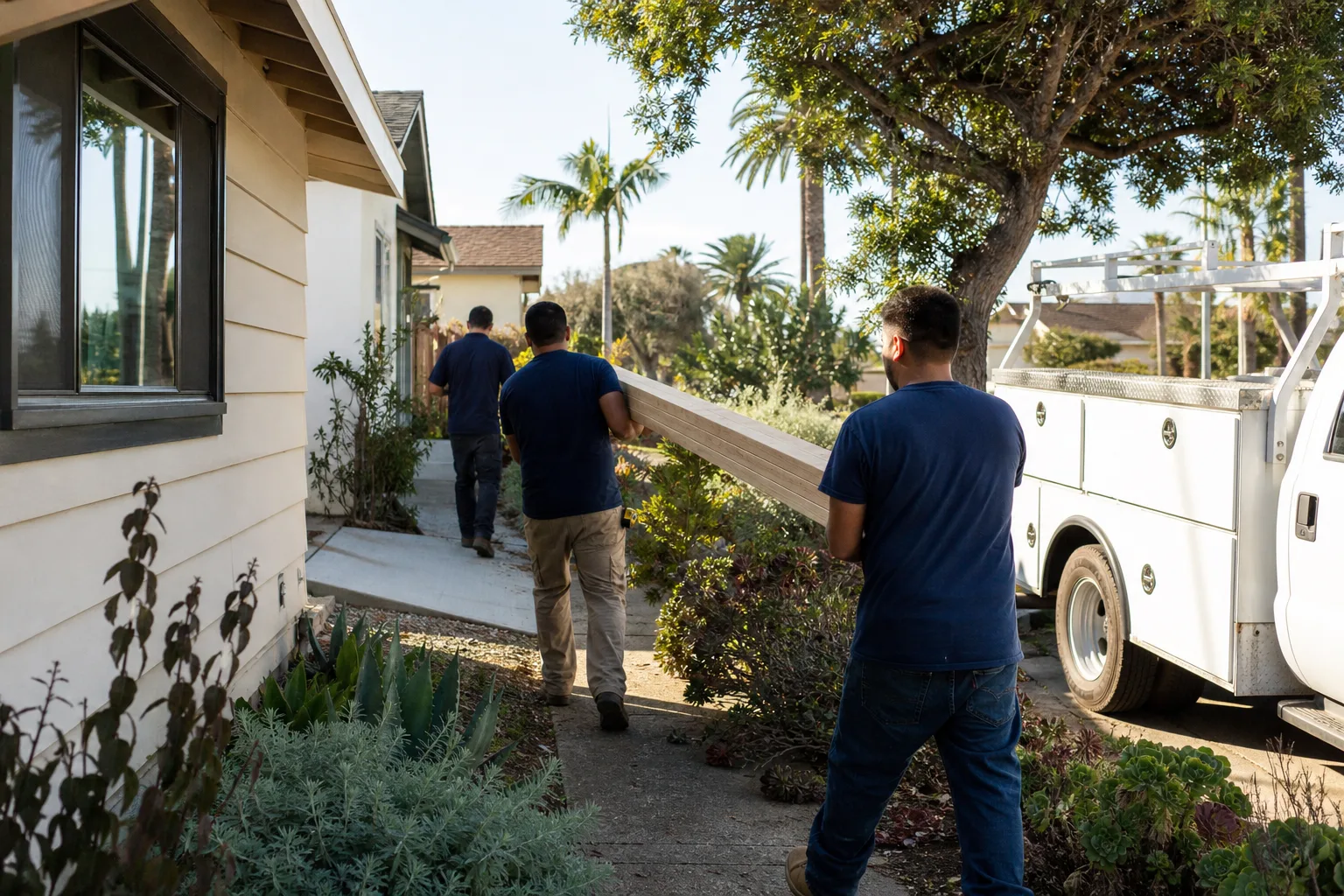
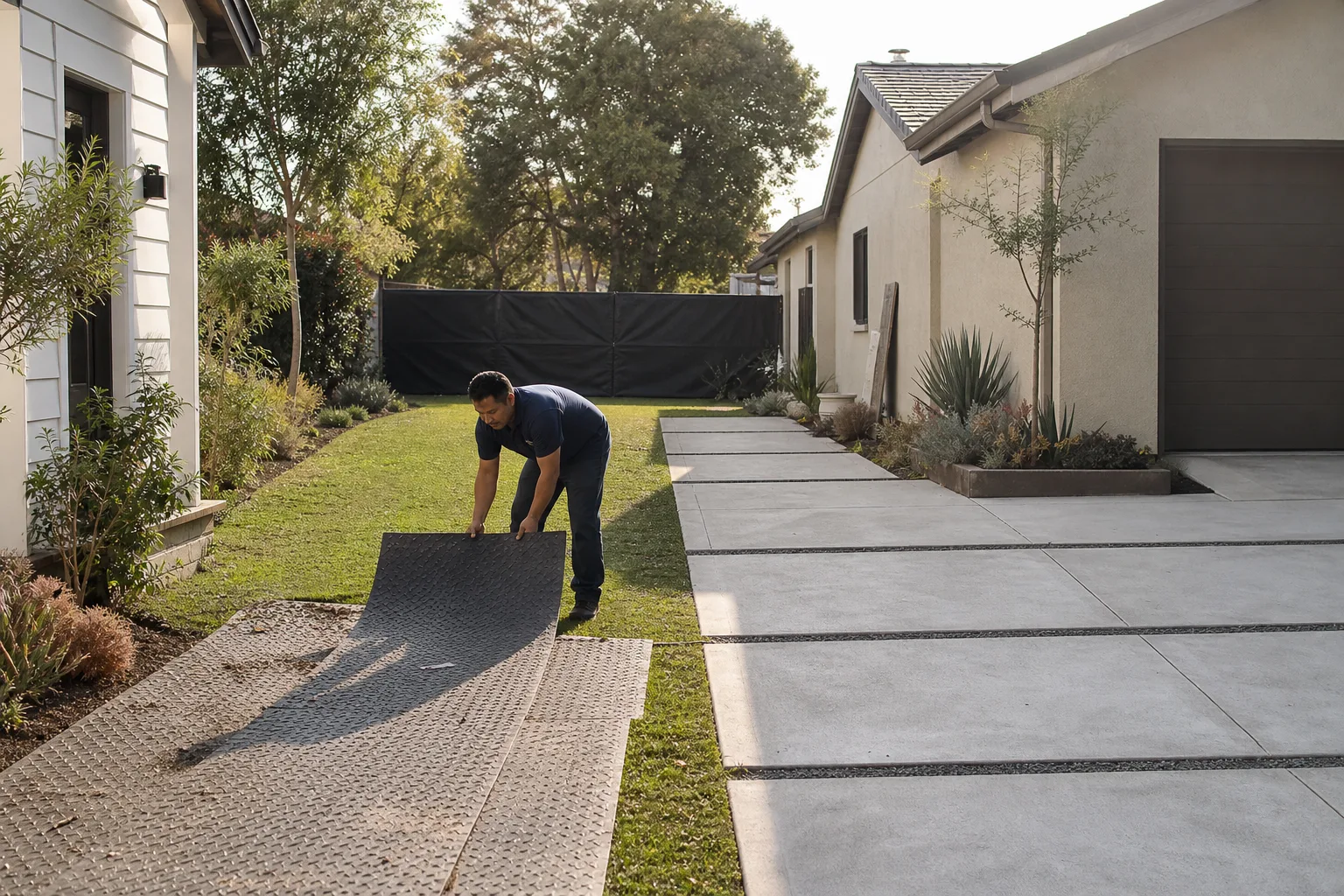
The hybrid path is what we recommend to most San Jose homeowners who want to save money without carrying the full weight of owner-builder status. Here’s how it works: you hire a licensed garage conversion or ADU contractor to handle the permitted scope, meaning everything from site prep through framing, rough-in, and exterior weatherproofing, then you take over the finish work where California allows. The contractor pulls the permit in their name as a licensed contractor, so you avoid owner-builder status entirely. The finish work you do is permitted and legitimate; you are acting as a homeowner doing work on your own property, not as an unlicensed contractor.
This model only works if your contract is written the right way from the start. Here is the step-by-step structure we recommend:
- Divide the scope in writing before the permit is pulled. The contract needs a scope section that explicitly lists what the contractor will do and what you will do. Vague divisions like “homeowner does finishing” create exactly the kind of conflict that turns an ADU build sour.
- State who is responsible for each inspection. San Jose inspectors want the responsible party present depending on the phase. A framing inspection is the contractor’s responsibility. A final inspection after you install flooring and paint is often still the contractor’s responsibility, because the permit is in their name. Spell this out.
- Define the handoff point precisely. A good handoff is: “Contractor scope ends at drywall complete, taped, and passed inspection. Homeowner scope begins after that point and includes: interior paint, flooring, trim, interior door installation, finish hardware, and fixture installation.” That clarity protects both sides.
- Agree on material responsibility. Who buys the flooring and paint? Who is responsible if a homeowner-installed finish fails inspection or causes a punch-list item? Put it in the contract.
- Set a schedule with your finish work mapped in. An ADU build stalls when the contractor finishes drywall and then waits six weeks while the homeowner tries to find time to paint. The contract should include target dates for your phase, with an understanding that delays on your side shift the contractor’s final inspection and close-out.
- Confirm the contractor’s guarantee covers the contractor’s work, not yours. This is a fair line to draw, and a written guarantee should state it plainly. What the contractor builds is guaranteed. What you install is your responsibility. Both parties should agree to that in writing before work starts.
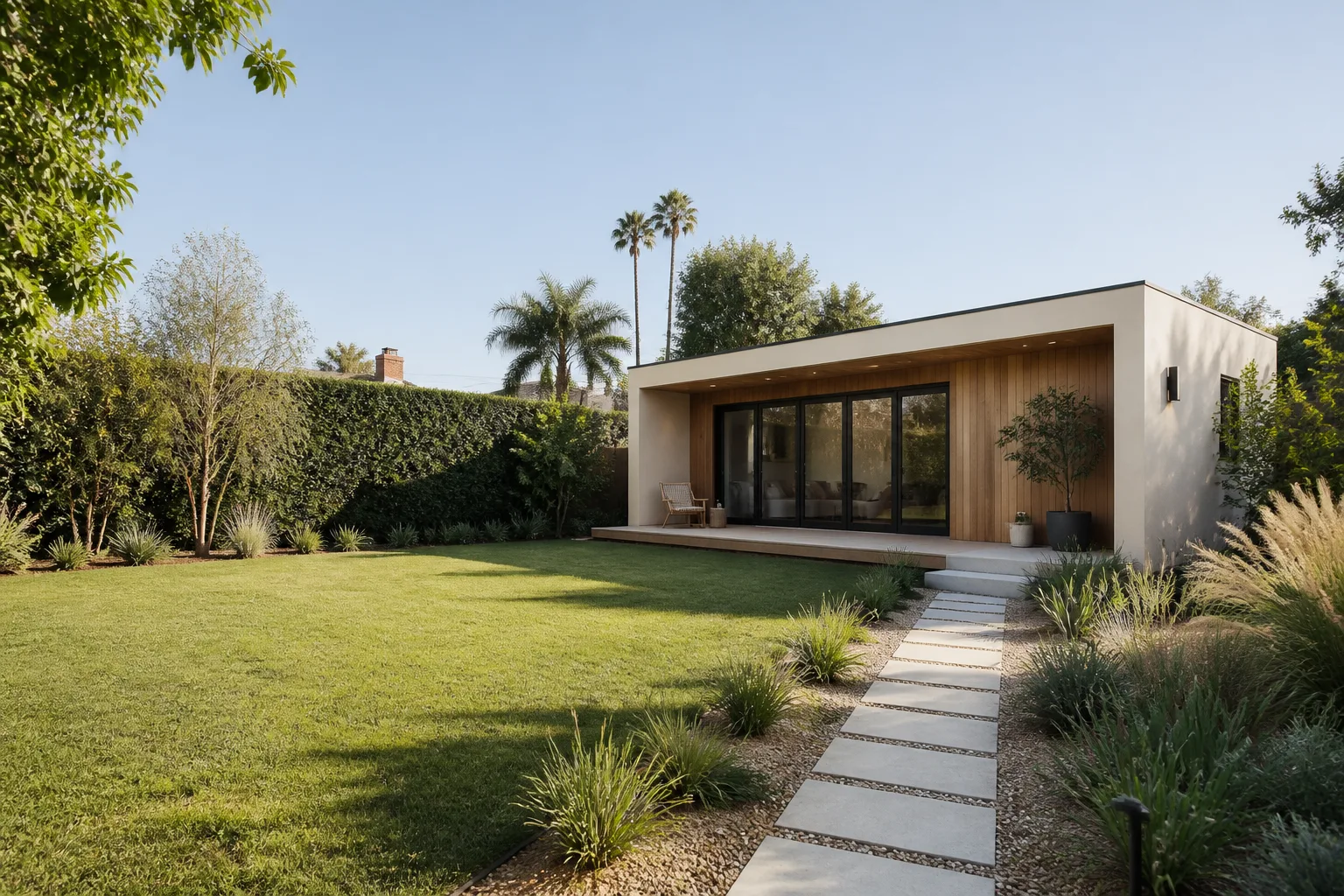
The hybrid model is where brands like Abodu and Cover have made the process more predictable. Those companies deliver pre-engineered ADU modules or panelized systems that reduce the site-framing window, which shrinks the contractor’s on-site time and gives homeowners a cleaner handoff for finish work. You can have a conversation with a San Jose ADU builder about whether a prefab or panelized approach fits your lot; some sites in the Rose Garden or Willow Glen neighborhoods have tight setbacks that make modular delivery challenging, while others in Cambrian or Almaden Valley have enough room for a crane and a module.
The Insurance Gap: What Your Policy Covers vs. What a GC’s Policy Covers
This is the conversation most San Jose homeowners never have until something goes wrong. Here is the gap in plain terms.
During a licensed contractor’s build: the contractor carries general liability insurance, typically $1 million to $2 million per occurrence, plus workers’ compensation insurance covering every worker on site. If a worker falls off a ladder, the GC’s workers’ comp covers it. If a subcontractor drops a beam through your existing house’s roof, the GC’s liability policy responds. If a third party is injured walking near the site, the GC’s policy is the first line of defense. Your homeowners policy sits in the background, but the contractor’s policies are primary.
During an owner-builder build: you are the general contractor, which means your homeowners policy is now the primary coverage, and most standard homeowners policies have specific exclusions for construction activity. Read your policy’s “business pursuits” and “construction” exclusions carefully. If a hired worker is injured on your site and you have not verified their license and workers’ comp, your personal assets can be directly exposed. If a tool fire damages the ADU mid-build, your homeowners policy may deny the claim because the structure is under active construction and not completed.
Some San Jose homeowners buy a short-term builder’s risk policy for an owner-builder project, which covers the structure itself during construction. That covers fire, theft, vandalism, and wind damage to the partially built ADU. But builder’s risk does not cover liability for injuries, and it does not replace the contractor’s legal duty of care. You can also purchase a course of construction rider on your homeowners policy, but availability and pricing vary, and many carriers in California have tightened construction-related endorsements.
What about the workers themselves? California requires every employer, including an owner-builder who directly hires labor, to carry workers’ compensation if they have any employees. The dividing line of who counts as an employee is not always clear, and San Jose has seen its share of disputes where a homeowner informally hired someone, that person was hurt, and the state determined an employment relationship existed. Licensed subcontractors with their own workers’ comp insurance remove that exposure. Unlicensed day labor does not.
If you want the insurance question answered precisely for your specific property and project, a licensed contractor’s broker and your own insurance agent should both review the plan. Do not accept a verbal assurance from anyone.
Common Mistakes to Avoid
- Pulling an owner-builder permit without understanding the five-year resale disclosure. Many San Jose homeowners only learn about the restriction when they go to sell or refinance. The permit is a public record, and the disclosure is mandatory. You cannot outrun it.
- Using unlicensed labor to save money. A lower day rate becomes an expensive lesson when someone is injured or when San Jose issues a stop-work order because an unlicensed worker was on site. The city has authority to halt projects for unlicensed activity, and homeowners can face civil penalties.
- Assuming “owner-builder” means “I must do everything myself.” You may hire licensed subcontractors for any scope under an owner-builder permit. The mistake is not hiring them and trying to perform electrical, plumbing, or gas work that California law reserves for licensed trades.
- Budgeting for hard costs only. Permits, PG&E connection fees, sewer lateral work, and San Jose school impact fees have all surprised owner-builders who priced the project with an online calculator. Add 20 percent to your early estimate and see if the numbers still work.
- Starting finish work before the rough-in inspections are signed off. Covering electrical wiring with drywall before the inspector has approved the rough-in is a classic San Jose owner-builder mistake. The inspector will require you to open the wall. It happens every month.
- Signing a hybrid-scope contract that is silent on who does what. When the scope division is vague, both sides feel taken advantage of by the midpoint of the project. Write the scope division down, put dates on it, and sign it before work starts.
- Ignoring the PG&E timeline. Power for a new detached ADU often requires a new service or a panel upgrade, and PG&E’s process has been slow in San Jose. Start that application early, before you assume a move-in date.
When to Call a Professional
If your San Jose property has any of these conditions, stop considering the pure owner-builder path and talk to a licensed ADU contractor before making a decision: hillside or sloped lot, substantial tree removal near the build site, a sewer lateral that needs a new tie-in at the street, a main electrical panel that is already near capacity, any water intrusion or drainage problem on the existing house, or a lot in a historic district or HOA with additional review layers. Each of these adds complexity that multiplies the risk of an owner-builder project. For San Jose homeowners who want a real written price, a defined scope, and a written guarantee, Lodgewick ADU San Jose offers free estimates across the city. Call (669) 266-4319 and a live person will answer, any hour, any day.
Frequently Asked Questions
A fully contracted ADU in San Jose typically costs $350,000 to $550,000 for a 500 to 750 square foot unit, including design, permits, site work, construction, and finishes. The range reflects lot conditions, finish level, and whether the project is a detached ADU or attached conversion. Call (669) 266-4319 for a written estimate specific to your lot.
Yes, California law allows a homeowner to act as an owner-builder on their own ADU, but the permit comes with real legal consequences including a five-year resale disclosure, personal liability for construction defects, and responsibility for jobsite safety. Most San Jose homeowners who pursue “DIY” actually do a hybrid: a licensed contractor handles permitted work, and the owner does finish work.
If you sell your San Jose home within five years of completing an owner-built ADU, you must disclose the owner-built status in writing to the buyer. Lenders often require additional documentation and inspections for owner-built ADUs, which can slow the sale or reduce the appraised value.
With a contractor who provides written, fixed pricing before work begins, the price does not change unless you change the scope. That is the standard. Before you sign any contract, ask whether the price is fixed and what specific conditions, if any, would trigger a change order. Get it in writing.
Yes. All ADUs in San Jose require building permits, and most require separate electrical, plumbing, and mechanical permits. Working without permits exposes you to stop-work orders, fines, and problems when you try to sell or refinance. A licensed ADU contractor handles permitting as part of the contract.
A typical detached ADU in San Jose takes 8 to 14 months from design start to final inspection, depending on scope, permitting timelines, PG&E service work, and the contractor’s schedule. Owner-builder projects often run longer because the owner is coordinating inspections and trades for the first time. For year-round upkeep after completion, see our Seasonal ADU Care for San Jose: Year-Round Homeowner’s Guide. Prefab models from companies like Abodu, Cover, Dvele, or Mighty Buildings can reduce the on-site construction window, but site work and utility connections still follow San Jose’s timelines.
You can legally paint, install flooring, hang trim, assemble and install cabinets, and set finish fixtures after the rough-in inspections are signed off. Those scopes can save $20,000 to $40,000 on a typical San Jose ADU. Leave structural, electrical, plumbing, HVAC, and gas work to licensed trades.
Yes. Lodgewick ADU San Jose has hands-on familiarity with leading ADU systems, including Abodu, Cover, Dvele, and Mighty Buildings. We match the system to your lot, budget, and timeline, and manage the site and utility work that prefab still requires. Call (669) 266-4319 to talk through whether a prefab ADU fits your San Jose property.
The Bottom Line
The DIY-versus-hire decision on a San Jose ADU is not a question of skill; it’s a question of legal exposure. Owner-builder status in California triggers a five-year resale disclosure, lender scrutiny, personal liability for defects, and full responsibility for jobsite injuries. What most homeowners actually want is the hybrid model: a licensed contractor pulls the permit and handles structural, electrical, plumbing, and mechanical work under a written price and a written guarantee, while you save money on paint, flooring, trim, and fixtures. Done that way, you get real savings without betting the resale value of your home. If you want a real written price and a straight conversation about your San Jose lot, call (669) 266-4319.
Written by Russ Delmar, Owner at Lodgewick ADU San Jose, serving San Jose since 2010.