Last updated October 15, 2026
Seasonal ADU Care for San Jose: Year-Round Homeowner’s Guide
San Jose averages only 15 inches of rain per year, but roughly 80% of it falls between November and March. An ADU that wasn’t properly sealed in October takes that entire winter’s moisture load in about 90 days. That compressed rainy season is why most national maintenance guides get San Jose wrong: they’re written for four-season climates with evenly spread precipitation. Here, the seasons that matter are dry, rainy, dry again, and hot. This guide walks through the four seasonal checks that actually apply to accessory dwelling units (ADUs – self-contained living spaces on the same lot as a primary home) in San Jose, when to do them, what they cost to fix when skipped, and what a tenant can legally handle versus what the property owner must cover under California law. For ADU Permits, Codes & Inspections in CA: What You Need to Know, see our dedicated resource.
Quick Answer
Seasonal ADU care in San Jose comes down to four tasks matched to the local climate: a fall moisture-sealing check before the November rains arrive, a winter drainage inspection during the rainy season, a spring exterior and ventilation assessment after the rain stops, and a summer heat-load check on attic and HVAC systems. The October prep window is the one task that can’t wait, because 80% of the year’s rain arrives in a 90-day window and any gap in roof-to-wall flashing, exterior caulking, or downspout routing will take on the entire winter’s moisture at once.
Table of Contents
- Why San Jose’s Climate Breaks Generic ADU Maintenance Advice
- The October Prep Window: What to Check Before the First Rain
- Winter Drainage: Keeping Water Away from the ADU Foundation
- Spring Assessment: What to Inspect After the Rain Stops
- Summer Heat Load: Attic Ventilation and HVAC on a Detached ADU
- What a Clean Job Site Means for Long-Term ADU Health
- Tenant-Occupied ADUs: What the Landlord Handles vs. What the Lease Can Assign
- Common Mistakes to Avoid
- When to Call a Professional
- Frequently Asked Questions
- The Bottom Line
Why San Jose’s Climate Breaks Generic ADU Maintenance Advice
Most seasonal home-care guides assume a climate with four distinct seasons: a cold, snowy winter; a wet spring; a hot, humid summer; and a crisp fall. San Jose has none of that. The city sits in a Mediterranean climate zone with five to six dry months from May through October, followed by a compressed rainy season from November through April, with peak rainfall in December, January, and February. The dry season isn’t mild, either. San Jose regularly sees summer days above 90°F, and heat waves can push into the triple digits for a week or more at a time, especially in neighborhoods like Almaden Valley, Evergreen, and the east foothills.
What this means for an ADU is simple: moisture problems happen in a narrow window, but they develop all at once. A small gap in roof flashing that would be a nuisance in a rainy climate becomes a serious problem here because it receives months of accumulated moisture stress in a few weeks. The same logic applies in reverse during summer. When the air is dry and hot for five months straight, wood framing, caulking, and paint dry out, shrink, and crack. Then the rain comes, and every one of those dry-season cracks becomes a water entry point.
We’ve worked on ADU builds and repairs across San Jose, and the pattern is consistent. The units that develop problems are almost always the ones where no one did a fall seal check. The units that stay dry year after year are the ones where the owner spent two hours in October checking flashing, caulk, and downspouts before the first storm hit.
San Jose’s Four Real Seasons for ADU Care
- Dry season prep (September – October): Seal, flash, and redirect water before the rain arrives. This is the highest-stakes window of the year.
- Rainy season monitoring (November – March): Watch drainage, check gutters and downspouts after heavy storms, and catch small leaks before they become structural.
- Spring assessment (April – May): Inspect everything that winter exposed: paint, caulk, roof, crawlspace, and any water staining. Make repairs while the weather is still dry.
- Peak summer heat load (June – August): Verify attic ventilation, clean or replace HVAC filters, and inspect door and window seals that may have shrunk in the heat.
That’s four tasks, not twelve. A twelve-month calendar of generic “spring flowers, fall leaves” home advice fits a house in Ohio. It does not fit an ADU in San Jose.
The October Prep Window: What to Check Before the First Rain
October in San Jose is the single most important month for ADU maintenance. The first significant rain usually arrives in late October or early November, and the storms that follow come in quick succession. A unit that hasn’t been checked before that first storm is gambling with five months of accumulated damage risk.
Here’s the step-by-step October prep list we recommend for every ADU owner in San Jose, whether the unit is owner-occupied, rented to a tenant, or used as a home addition for family.
- Inspect all roof-to-wall transitions. Walk the perimeter of the ADU and look at every point where the roofline meets a wall. L-flashing, step flashing, and counter-flashing should be tight against both surfaces. In San Jose’s dry season, sealant can crack and separate from painted surfaces. If you see daylight under any flashing edge, that’s a water entry point.
- Check every exterior penetration. This includes vent hoods, plumbing vents, electrical conduit, cable lines, mini-split line sets, and anything that passes through an exterior wall. Each penetration should have a bead of exterior-grade sealant that is intact and flexible. Push gently on the sealant with a finger. If it’s brittle or pulling away, it needs to be removed and replaced.
- Clean gutters and test downspouts. Even a small ADU with a simple roofline has gutters. Dry leaves, pollen, and dust accumulate throughout the dry season. Clogged gutters overflow during winter storms, and overflowing water runs down the wall and collects at the foundation. After cleaning, run a hose through the downspout to confirm it drains freely and that the extension carries water at least four to six feet from the foundation.
- Inspect the HVAC system before you need it. Many San Jose ADUs use ductless mini-splits for heating and cooling. Check the filters, clean the exterior condenser coil if it’s dusty, and run the system in both heating and cooling mode to confirm it switches properly. If the unit struggles, October is the time to call a technician, not January when every HVAC contractor in the county is booked for two weeks.
- Check weatherstripping on all doors and windows. San Jose’s dry season causes weatherstripping to shrink and crack. Run your hand around each exterior door and window. You should feel resistance from the gasket along the entire perimeter. If there are gaps, replace the stripping before the rains arrive.
In our experience, most ADU leaks we find during winter could have been caught in October with a ladder, a flashlight, and a tube of exterior sealant. The property owner who skips this window usually ends up paying for drywall repair, insulation replacement, and mold remediation by February. See ADU Warning Signs: A San Jose Homeowner’s Reference Guide for earlier indicators of trouble.
What October Prep Costs vs. What Skipping It Costs
- Gutter cleaning on a detached ADU: $120 – $250 for a single-story unit, $250 – $450 for a two-story or steep-roof unit
- Exterior sealant replacement (materials for DIY): $15 – $40 per tube of quality exterior sealant, with most ADUs needing two to four tubes
- Weatherstripping replacement (materials): $30 – $80 for all exterior doors and windows
- HVAC seasonal service call: $100 – $250 for inspection and basic maintenance
- What a missed roof-to-wall leak costs by spring: $1,500 – $5,000 for drywall, insulation, and paint repair; $3,000 – $8,000 if mold remediation is required
The math is straightforward. Two hours in October beats a five-figure repair bill in April.
Winter Drainage: Keeping Water Away from the ADU Foundation
During San Jose’s rainy season, the ADU’s first line of defense is not the roof or the walls. It’s the ground immediately around the foundation. Most foundation problems in this area come down to a single issue: water that isn’t carried far enough away from the structure.
Here’s what to watch for between November and March:
After Every Heavy Storm: The Perimeter Walk
- Check for standing water. After a significant storm, walk the perimeter of the ADU. Look for any pooling within six feet of the foundation. In flat-lot neighborhoods like Willow Glen and Cambrian, standing water is common and often goes unaddressed for months. Every puddle against a foundation wall is slowly saturating the soil, increasing hydrostatic pressure, and inviting water through hairline cracks.
- Verify downspout extensions are still in place. During heavy rain, water volume can knock extensions loose or shift them. Make sure each extension is properly attached and directing water at least four to six feet away from the sill plate.
- Look for new cracks in stucco or siding. Wet soil expands, and expanding soil pushes against foundations and walls. If you see a new hairline crack at the base of an exterior wall after a storm, mark it with a pencil line and check it again in two weeks. A crack that grows through the rainy season is a sign of soil movement, not just cosmetic settling.
- Check the crawlspace if the ADU has one. Many San Jose ADUs are built on raised foundations with crawlspaces. After heavy rain, go under the unit with a flashlight and check for water pooling, wet insulation hanging down, or moisture on the underside of the subfloor. All three indicate either a drainage problem at the perimeter or a plumbing leak.
French Drains and Swales: What Actually Works in San Jose Soil
San Jose’s soil is a mix of clay loam in the valley floor and sandy loam in foothill areas. Clay-heavy soil drains slowly, which is why many newer ADU builds in neighborhoods like Berryessa and Alum Rock have French drains installed at the foundation perimeter as part of the original construction. A French drain is a perforated pipe buried in gravel that captures groundwater and carries it away before it reaches the foundation.
If your ADU was built with a French drain, it needs an annual inspection. The telltale sign that a French drain has failed is not standing water at the surface, but a persistently damp crawlspace or a musty smell inside the unit after rain. French drains clog over time with fine clay sediment, and a clogged French drain is worse than no drain at all because it concentrates water in one location.
If your ADU does not have a French drain and you’re seeing recurring moisture at the foundation, a garage conversion contractor familiar with San Jose soils can evaluate whether one is needed. Installing a French drain on a standard single-story ADU typically runs $3,000 to $8,000, depending on the perimeter length and the distance to a drainage outlet.
Spring Assessment: What to Inspect After the Rain Stops
April and May in San Jose are the ideal months for a full exterior inspection. The rain has stopped, the weather is dry, and everything that winter damaged is visible. If you catch problems now, you have five months of dry weather to address them before the next rainy season.
The Post-Rain Checklist
- Roof: After the rainy season ends, inspect the roof surface. Look for lifted or cracked shingles on composition roofs, punctures or seam separations on membrane roofs (common on flat-roof ADUs with modern design), and any debris that accumulated over the winter. On flat roofs, check that water isn’t ponding anywhere. A puddle that remains 48 hours after a rain is a drainage failure.
- Paint and caulk: Winter rain followed by spring sun is the combination that causes paint to bubble and caulk to fail. Walk the entire exterior and look for peeling paint, especially around window frames, door jambs, and the bottom two feet of exterior walls where splash-back hits.
- Siding and trim: Fiber cement siding like James Hardie products holds up exceptionally well in San Jose conditions, but the trim boards, corner boards, and soffits around it need regular inspection. Look for swelling, warping, or soft spots that indicate water got behind the finish.
- Foundation vents: If the ADU has a raised foundation, check all foundation vents. They should be open and clear for summer ventilation. If the screens are torn, replace them before rodents move in. Rodent activity increases in May and June, and a torn foundation vent screen is an open invitation.
- Interior water stains: Go through every room in the ADU and look at the ceiling, especially corners, and the walls around windows. Any water stain that appeared during winter indicates a leak that needs to be traced to its source. A stain that is dry to the touch is still a signal: the leak existed once, and it will return next winter if not addressed.
Why Spring Repair Beats Fall Repair
Homeowners who discover a problem in spring have a choice: fix it now or wait until fall. We recommend fixing it now for one simple reason: the long dry season is the best possible environment for exterior repairs. Sealant cures properly. Paint dries evenly. Roof repairs bond well. The same repair done in October still works, but it’s done under time pressure, and if the first storm arrives earlier than expected, the repair might not have fully cured before taking on rain.
Spring is also when many San Jose homeowners begin thinking about building or upgrading an ADU. If your spring inspection reveals that the unit needs more work than simple maintenance, you have the entire summer to plan a renovation or rebuild without fighting the weather.
Summer Heat Load: Attic Ventilation and HVAC on a Detached ADU
San Jose’s summer heat is a different kind of challenge than winter rain. A detached ADU sits alone on the lot, with all four walls exposed to sun and no shared walls with a larger structure. That means the unit heats up faster and retains heat longer than a primary home, especially if the attic space isn’t properly ventilated.
Here’s what to check before the first heat wave hits.
Attic Ventilation: The Most Overlooked Summer Issue
Most ADUs built in the last ten years have some form of attic ventilation: ridge vents, gable vents, or, in some cases, powered attic fans. But ventilation equipment fails quietly. Ridge vents get blocked by leaves and bird nests. Gable vent screens tear and let in rodents, which build nests that block airflow. Powered fans burn out and stop spinning, and no one notices until the unit is 100°F inside.
The test is simple. On a hot day, go into the ADU’s attic space, if accessible, or simply compare the temperature of the ceiling to the temperature of the walls. If the ceiling feels meaningfully hotter than the walls at the same time of day, the attic is retaining heat, and the interior HVAC system is working against that extra heat load.
An under-ventilated attic does two things. First, it drives up cooling costs, because the interior air conditioner is fighting a hot ceiling radiating heat downward. Second, and more important, it shortens the life of the roof. Shingle and membrane roofs break down faster when the underside of the roof deck stays excessively hot for months at a time. In San Jose’s five-month hot season, a poorly ventilated attic can reduce roof life by several years.
HVAC Maintenance for a Detached ADU
- Replace or clean all filters before summer. Most ADU mini-split systems have washable filters that collect a surprising amount of dust and pollen from the dry season. Clean filters improve airflow and reduce strain on the compressor.
- Clear the condenser unit. The outdoor condenser should have at least two feet of clear space on all sides. In San Jose, dry grass, leaves, and dust accumulate around condenser units during spring. Trim back any vegetation that has grown close, and rinse the coil fins gently with a garden hose to remove dust.
- Test the system on a hot day. Set the thermostat to 78°F and let the system run for 30 minutes. If the air coming from the vents is not noticeably cold, or if the unit short-cycles (turns on and off frequently), the system needs professional service. A system that short-cycles on a hot day is usually low on refrigerant or has a failing capacitor.
- Check window and door seals. Weatherstripping that shrinks in the dry season lets cooled air escape. Run your hand around each opening. Anywhere you feel cold air escaping on a hot day is a leak that is costing money.
For prefab and panelized units from manufacturers like Plant Prefab, Abodu, or Tuff Shed-based backyard studios, the HVAC system is often compact and works well when properly maintained. But these systems can fail quickly when filters are ignored for a season or two, because the units are smaller and run harder in a detached unit with full sun exposure.
What a Clean Job Site Means for Long-Term ADU Health
ADU maintenance starts the day the unit is built, and how the construction site is left matters more than most homeowners realize. A sloppy job site creates maintenance problems that appear months or years later. Here’s what to watch for, whether you’re building new or evaluating the aftermath of a repair.
Debris Against Foundation Walls
When a construction crew leaves lumber scraps, drywall pieces, and packaging material piled against an exterior wall, it’s more than an eyesore. That debris holds moisture against the foundation and exterior finish. In San Jose’s dry season, it seems harmless. When the rains come, the debris acts like a sponge, keeping the bottom of the wall damp for weeks at a time. Damp walls invite wood-destroying pests, encourage mold, and accelerate siding deterioration.
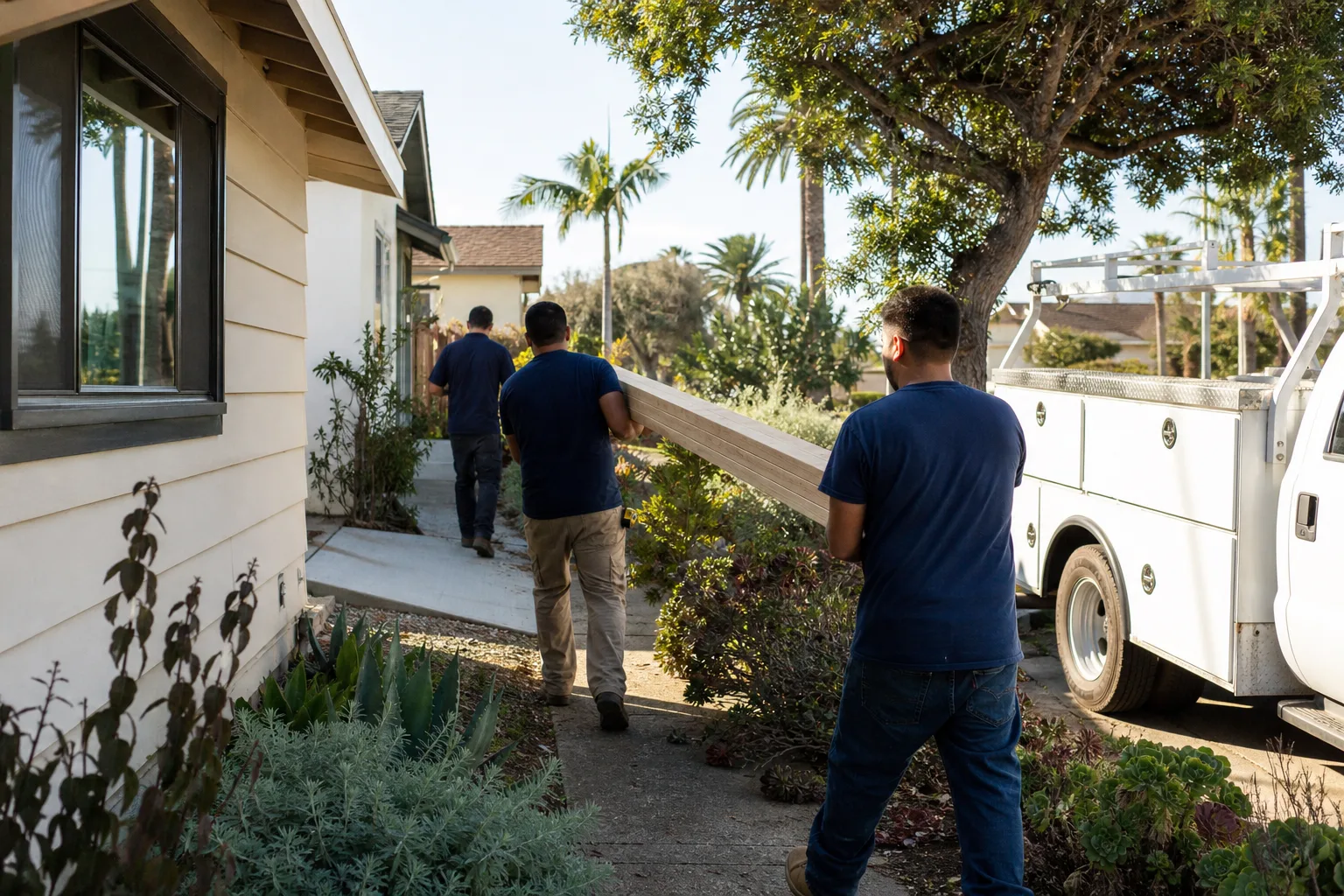
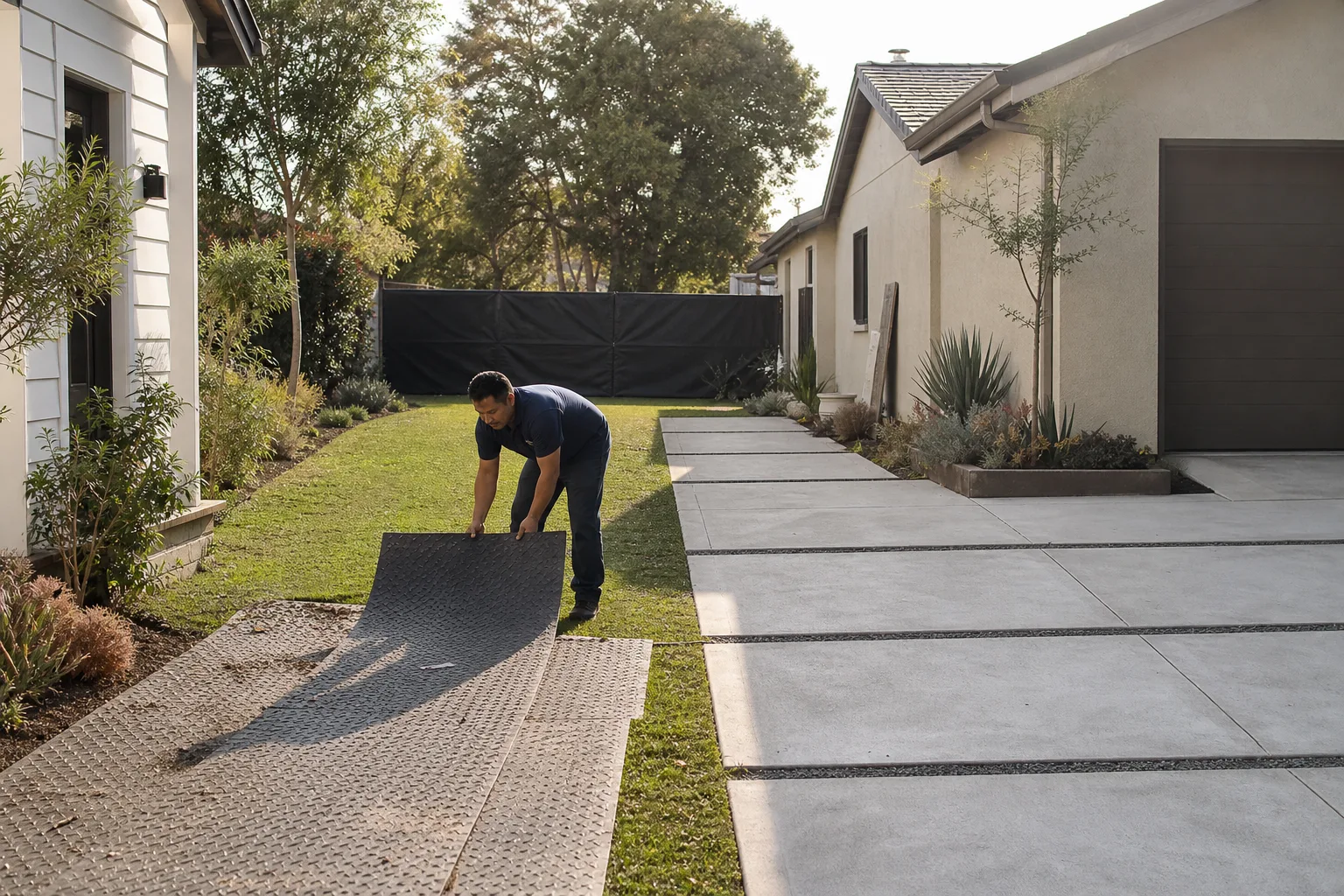
The Kingswell Way, the standard we operate under, includes leaving a job site cleaner than we found it. That’s not a courtesy. It’s a maintenance strategy. A clean perimeter means water drains properly, you can see the foundation, and you can spot problems early instead of discovering them after they’ve been hidden for six months behind a pile of scraps.
Downspout Extensions: The Cheap Fix That Prevents Expensive Damage
One of the most common issues we see on existing ADUs in San Jose is a downspout that ends at the foundation wall. The gutter system works perfectly: it captures all the roof water and channels it downward. Then it dumps every drop directly at the base of the wall, where it soaks the soil, presses against the foundation, and eventually finds a crack or seam.
Downspout extensions cost $10 to $30 each at any hardware store. They take five minutes to install. They prevent foundation cracks, crawlspace flooding, and stucco damage at the base of the wall. Yet in our experience walking San Jose properties, roughly one in four ADUs has at least one downspout that dumps water at the foundation line.
Mulch and Soil Piled at the Sill Plate
Landscaping is the other common job-site issue. When soil, mulch, or ground cover is piled against the bottom of the exterior wall, it breaches the required gap between the ground and the siding, known as the sill clearance. This gap exists to keep the framing dry and to make termite inspection possible. In San Jose, subterranean termites are active year-round, and a mulch bed against the siding is an invitation.
A good rule is to maintain at least six inches of clear space between the ground and the bottom of the siding on all exterior walls. If a landscaper or the original construction crew left the grade too high, correct it before the next rainy season.
Tenant-Occupied ADUs: What the Landlord Handles vs. What the Lease Can Assign
San Jose has one of the strongest tenant protection frameworks in California, and many homeowners rent their ADUs to help cover mortgage costs. When an ADU is tenant-occupied, the maintenance responsibilities are split between the landlord and the tenant, and the split is defined by both the lease and state law. Here’s what California requires, versus what a lease can reasonably assign.
What the Landlord Is Always Responsible For
Under California Civil Code Section 1941, landlords are required to maintain rental units in a habitable condition. For an ADU, that means the landlord or property owner is responsible for:
- Roof, flashing, and gutter systems: Any leak, roof failure, or drainage issue is a habitability matter. The landlord must fix it promptly.
- Foundation and structural elements: Cracks, settling, water intrusion at the foundation, and related structural issues are entirely the landlord’s responsibility.
- HVAC systems: California requires working heating. Air conditioning is not mandatory by law, but if the unit was rented with a working AC system, the landlord is generally expected to maintain it.
- Plumbing, electrical, and gas systems: Any failure in these systems is a habitability issue and must be addressed by the landlord or a qualified professional.
- Water intrusion and mold: If water gets inside the unit and mold develops, the landlord is responsible for remediation.
What a Lease Can Assign to a Tenant
A lease can assign certain routine maintenance tasks to the tenant, provided the lease language is clear and the tasks do not affect habitability. Reasonable tenant responsibilities include:
- Replacing interior HVAC filters (when access is simple and the filters are standard)
- Keeping interior drains clear (routine drain cleaning, not major blockages)
- Replacing light bulbs and smoke alarm batteries
- Reporting leaks, mold, or system failures promptly
- Keeping the unit reasonably clean to prevent pest issues
The key principle: any maintenance task that, if neglected, could make the unit uninhabitable or cause structural damage must remain with the landlord. An ADU owner who writes a lease that shifts structural responsibility to the tenant is creating legal liability and a maintenance gap.
We recommend that any ADU lease in San Jose include a written seasonal maintenance schedule that spells out exactly who does what. It protects the landlord, sets clear expectations for the tenant, and ensures that someone is checking the unit before the rains arrive every October.
Common Mistakes to Avoid
- Skipping the October seal check because “it never rains that much here.” San Jose gets most of its rain in a 90-day window, and a small gap in flashing will take on the entire winter’s moisture in that compressed period. The repair bill by spring will make the two-hour fall inspection look cheap.
- Letting downspout extensions fall off and not replacing them. Every downspout that ends at the foundation is silently causing damage. This is a $15 fix that prevents a $5,000 foundation repair.
- Piling mulch or soil against the ADU’s exterior walls. The required sill clearance isn’t a suggestion. In San Jose’s termite-active climate, ground contact against siding is a standing invitation for structural pest damage.
- Ignoring a minor interior water stain because it’s dry now. A stain means the leak existed, and if the source wasn’t fixed, it will return next winter. Water damage compounds: what costs $800 to fix in spring can cost $4,000 by the following spring.
- Assuming a tenant will handle all seasonal maintenance. California law places habitability responsibilities on the landlord, not the tenant. If the tenant handles filters and reporting, the landlord must still arrange roof, drainage, and HVAC checks.
- Using interior caulk on exterior surfaces. Interior caulk is not rated for UV exposure or temperature swings. In San Jose’s hot dry summers and wet winters, interior caulk fails in a single season. Use an exterior-grade product rated for exterior use.
When to Call a Professional
Some seasonal ADU maintenance is DIY-friendly, and some is not. Call a professional when you see recurring water intrusion in the same location after two repair attempts, a roof that is sagging or showing signs of structural movement, an HVAC system that short-cycles or fails to cool on a hot day, or a crawlspace that stays damp through the dry season. Any of these signals indicates a problem that is beyond surface-level repair. For San Jose homeowners who want a professional assessment, Lodgewick ADU San Jose offers free estimates on ADU maintenance, repairs, and upgrades throughout the city. Call (669) 266-4319 to schedule your free estimate.
Frequently Asked Questions
For a standard single-story detached ADU, annual maintenance typically runs $300 to $800, covering gutter cleaning, sealant replacement, filter changes, and a basic HVAC service. Larger units with more complex rooflines run $800 to $1,500. These are prevention costs: the same year’s skipped maintenance can produce $3,000 to $8,000 in repair work by the following spring. For detailed cost projections, see our ADU Cost Breakdown: The San Jose Homeowner’s Reference for 2026. Call (669) 266-4319 for a free quote on your specific unit.
Do your ADU’s fall prep in late September or early October, before the first significant rain. San Jose’s rainy season typically begins in late October or early November, and the first storm arrives quickly after months of dry weather. Prepping in late September gives sealant and paint time to cure before rain touches the unit. If you’re not sure what to check, call (669) 266-4319 for a free fall inspection estimate.
No permit is required for routine maintenance like gutter cleaning, sealant replacement, filter changes, or cosmetic paint. A permit is required for structural repairs, foundation work, roof replacement, and significant electrical or plumbing changes. If your maintenance reveals a problem that needs permitted work, it’s better to handle it in spring or summer when dry weather allows proper installation and inspection.
Flat roofs on ADUs are common in San Jose and perform well when the membrane is installed correctly and drains are kept clear. The key is that flat roofs must have positive drainage: no ponding water that remains for more than 48 hours after rain. A properly installed flat roof with annual drain cleaning holds up to San Jose’s rainy season without problems. If your flat roof is ponding, call (669) 266-4319 for an assessment.
James Hardie fiber cement siding performs exceptionally well in San Jose’s dry heat and wet winters. It resists cracking from UV exposure, doesn’t swell in the rainy season, and holds paint well. Some prefab ADU manufacturers like Plant Prefab and Abodu also use high-performance exterior claddings that are well-matched to the local climate. The right choice depends on the unit’s orientation and budget.
Schedule seasonal inspections with proper notice, which in California is 24 hours for non-emergency entry, and coordinate with the tenant on timing. Put the maintenance schedule in the lease so the tenant knows what to expect. The October prep walk and the spring assessment should both be scheduled well in advance. These inspections take an hour or less and prevent much larger disruptions later.
The Bottom Line
San Jose’s climate asks more of an ADU than a casual reading of the weather would suggest. Five dry months followed by a compressed rainy season means one October inspection window matters more than any other task on the calendar. Do that fall seal check, keep downspouts extended, maintain attic ventilation through the summer, and know which responsibilities belong to the owner versus the tenant under California law. Those four habits, repeated every year, are the difference between an ADU that lasts decades and one that develops expensive, compounding problems. For professional help at any stage, from new builds to seasonal maintenance to repairs, call (669) 266-4319 for a free estimate, or explore more guides & resources on ADU ownership.
Written by Russ Delmar, Owner at Lodgewick ADU San Jose, serving San Jose since 2010.