Last updated October 15, 2026
ADU Cost Breakdown: The San Jose Homeowner’s Reference for 2026
Here’s the number that surprises almost every San Jose homeowner we sit down with: two bids for what sounds like the same 600-square-foot ADU can land $100,000 apart, and neither contractor is lying. A $180,000 quote and a $280,000 quote can describe the identical floor plan, the same drywall, the same kitchen faucet. The difference isn’t greed, it’s scope. One bid includes the full cost of putting a legal, connected, finished unit in your backyard. The other doesn’t. This guide names every line item that should appear on a San Jose ADU estimate, what each one actually costs in 2026, and where the four biggest surprise line items hide-complementing our The Complete Guide to ADU in San Jose. By the time you finish, you’ll know exactly what belongs on your bid sheet and what questions to ask before you sign anything.
Quick Answer
A complete ADU in San Jose costs between $280,000 and $450,000 for a detached new build, $180,000 to $300,000 for a garage conversion, and $220,000 to $350,000 for an attached addition, all-in with permits, design, utilities, and site work. If a quote comes in below those ranges, it almost certainly excludes design and engineering, city permit and impact fees, utility lateral upgrades, or site restoration, which together add $60,000 to $90,000 in San Jose.
Table of Contents
- Line-by-Line Cost Breakdown for Three ADU Types
- The Four Costs Most Bids Don’t Include
- San Jose Impact Fees and Permit Costs, by Size and Lot Type
- Where the Real Cost Variation Lives
- Financing a San Jose ADU in 2026
- How to Compare ADU Bids Apples-to-Apples
- Prefab vs. Site-Built: What Each Costs in San Jose
- Common Mistakes to Avoid
- When to Call a Professional
- Frequently Asked Questions
- The Bottom Line
Line-by-Line Cost Breakdown for Three ADU Types
Before we talk about what gets left out of bids, let’s build the full picture. These are real 2025 and 2026 ranges from working San Jose projects, current as of this writing. The three ADU types below cover most of what gets built in this city: a detached new-build unit in the backyard, a garage conversion, and an attached addition that extends off the existing house.
San Jose’s climate matters here more than most people realize. We don’t deal with freeze-thaw cycles, but we do deal with expansive clay soils in pockets of Willow Glen and Cambrian that push foundation costs up. We deal with a dry season that runs May to October, which is when most digging and pouring gets done, and that seasonal compression squeezes contractor schedules and can add 5 to 10 percent to mobilization costs if you want a late-summer start. None of that shows up in a national average. All of it shows up in a San Jose bid.
| Line Item | Detached New Build (600 sq ft) | Garage Conversion (450 sq ft) | Attached Addition (500 sq ft) |
|---|---|---|---|
| Design and engineering | $12,000 – $22,000 | $8,000 – $15,000 | $10,000 – $18,000 |
| Permits and city impact fees | $25,000 – $40,000 | $15,000 – $28,000 | $20,000 – $35,000 |
| Foundation or slab | $25,000 – $45,000 | $5,000 – $15,000 (reinforcement only) | $18,000 – $32,000 |
| Framing and structure | $45,000 – $70,000 | $15,000 – $30,000 | $35,000 – $55,000 |
| Electrical, including panel upgrade if needed | $15,000 – $30,000 | $10,000 – $22,000 | $8,000 – $18,000 |
| Plumbing, including sewer lateral | $18,000 – $35,000 | $12,000 – $25,000 | $10,000 – $22,000 |
| HVAC (mini-split or small forced air) | $8,000 – $15,000 | $7,000 – $13,000 | $6,000 – $12,000 |
| Drywall, insulation, paint | $18,000 – $28,000 | $14,000 – $22,000 | $15,000 – $24,000 |
| Flooring, tile, trim | $12,000 – $22,000 | $9,000 – $18,000 | $10,000 – $18,000 |
| Kitchen (cabinets, counters, appliances) | $25,000 – $45,000 | $20,000 – $35,000 | $22,000 – $38,000 |
| Bathroom | $15,000 – $30,000 | $12,000 – $25,000 | $13,000 – $26,000 |
| Site work and landscaping restoration | $12,000 – $25,000 | $4,000 – $10,000 | $8,000 – $18,000 |
| Total all-in range | $280,000 – $450,000 | $180,000 – $300,000 | $220,000 – $350,000 |
Those totals assume standard finishes: mid-grade LVP or engineered hardwood, quartz counters, mid-tier appliances, a standard tile shower. They assume a flat or gently sloped lot. They assume your electrical panel has room for a new subpanel, or that you know you’re paying to upgrade it. They assume the sewer lateral from the house to the street is in usable condition. Every one of those assumptions is worth testing before you lock in a number.
For reference on how garage conversions and additions fit into the broader picture, our Home Addition Contractor in San Jose page walks through how attached projects differ in scope from standalone units.
The Four Costs Most Bids Don’t Include
This is the section that saves people real money. Not because it lowers your cost, but because it prevents a $60,000 surprise from arriving in month three of your build. We’ve reviewed hundreds of bids from San Jose homeowners over the years, and these four categories are missing from more than half of them.
1. Design and Engineering
A “free estimate” is not design. A real ADU project needs architectural drawings, structural calculations, title 24 energy compliance, and often a soils report. In San Jose, that bundle runs $12,000 to $22,000 for a detached unit, less for a garage conversion because the envelope already exists. Some contractors roll this cost into their construction number. Others don’t mention it at all, and it becomes the first change order. Ask directly: “Does your price include architectural drawings, structural engineering, and title 24? Can you show me the design line item?”
2. City Permit and Impact Fees
San Jose charges plan check fees, building permit fees, and a school impact fee on new residential square footage. For a detached 600-square-foot ADU, those fees currently run $25,000 to $40,000 all-in. For smaller units, the numbers shift, which we’ll break down in the next section of our ADU Permits, Codes & Inspections in CA: What You Need to Know. What matters here is this: a “construction only” bid frequently excludes every city fee, and the homeowner doesn’t find out until the permit application comes back. If the word “permit” doesn’t appear as a priced line item, it isn’t in the bid.
3. Utility Lateral Upgrades
Your new ADU needs power, water, and a sewer connection. If the existing sewer lateral from your house to the main line is older clay pipe, San Jose code may require replacing it before you can tie in a second unit. That’s a trench across your yard, and it costs $8,000 to $20,000 depending on depth, length, and whether it runs under a driveway. Same story on the electrical side: if your panel is 100 amps and the ADU pushes you past its capacity, you’re buying a 200-amp upgrade at $4,000 to $8,000, sometimes more if the utility service drop needs rework.
4. Site Restoration
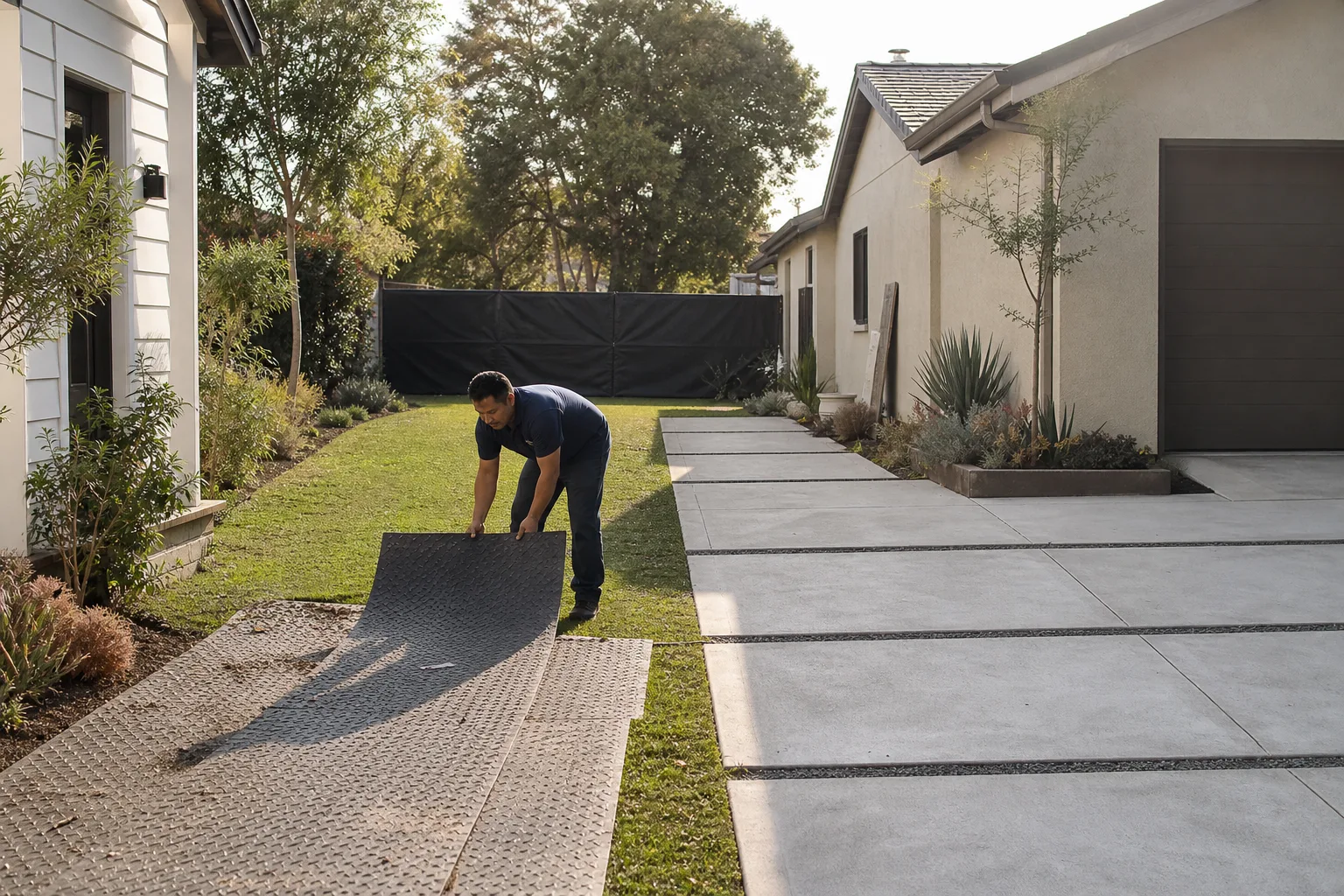
After the concrete is poured and the walls are up, someone has to put your yard back together. Trenching kills grass, concrete pumps track mud, and a 6-month build leaves a scar. Restoration, which includes regrading, sod or seeding, repairing irrigation, and sometimes fence replacement, runs $12,000 to $25,000 on a detached build. Bids that end at “final paint” don’t include this. Yet every homeowner expects it to be done. That’s the gap where bad feelings and surprise invoices live.
One of the reasons homeowners come to ADU Builders in San Jose is precisely this: they got a bid that looked unbeatable, and then the exclusions started arriving. A written line-item price, produced before any work starts, is the single best defense against the four hidden costs above.
San Jose Impact Fees and Permit Costs, by Size and Lot Type
San Jose’s fee structure changed meaningfully in 2020 when the city adopted new ADU ordinances aligned with state law, and again in 2024 with revised impact fee schedules. Here’s what we’re seeing on permits pulled in 2025 and carrying into 2026.
The city breaks ADU fees into two buckets: building and plan check fees (which scale with construction valuation) and development impact fees (which scale with square footage and school district). San Jose Unified, East Side Union, and the other districts serving the city each set their own school fee rates, but the practical spread for a typical ADU is modest.
- Under 500 square feet: Impact and permit fees typically run $15,000 to $25,000. The state’s ADU law caps certain utility connection fees for units this size, which helps.
- 500 to 749 square feet: Plan for $20,000 to $32,000. This is the most common ADU size range in San Jose, and it’s where most of our builds land.
- 750 to 1,000 square feet: Expect $28,000 to $40,000. School impact fees kick in harder here, and the building permit fee scales up with valuation.
- Over 1,000 square feet: $35,000 to $50,000 depending on school district and whether the unit is attached or detached.
One nuance worth knowing: infill lots can shift these numbers. If your property is on an infill parcel, which in San Jose generally means a lot that was vacant or underdeveloped relative to the surrounding block, the city may apply different development fee structures, and in some cases state ADU law reduces or waives certain fees for infill projects. That said, you should not assume a waiver. Ask the permit tech directly, by address, before you budget.
If the fee conversation feels overwhelming, that’s normal. This is the least glamorous part of building an ADU, and it’s also the part where a contractor with deep San Jose permitting experience earns their keep. A good builder pulls the permits, handles the plan check comments, and tracks the fee schedule for you. A bad one hands you the application and says good luck.
Where the Real Cost Variation Lives
So you’ve got three bids for the same detached 600-square-foot unit: $290,000, $340,000, and $390,000. What accounts for the spread, assuming all three include the four hidden categories above?
Foundation Type
San Jose sits on a patchwork of soil conditions. Much of the flatland has decent bearing soil and a standard slab-on-grade works fine. But pockets of the city, including parts of North San Jose near the bay and some older neighborhoods with historically filled land, require deeper footings, piers, or even a raised foundation system. That’s a $20,000 to $35,000 swing. A bidder who knows your block will price accordingly. A bidder working off a spreadsheet might not, and you’ll find out when the soils report comes back.
Panel Upgrade Requirements
If your existing home has a 100-amp panel and you’re adding a two-bedroom ADU with a kitchen, laundry, and mini-split HVAC, you’re almost certainly upgrading to 200 amps. Sometimes the utility transformer serving your block also needs upsizing, which is a PG&E scheduling item that can add weeks and several thousand dollars. A bid that says “electrical included” without specifying panel scope is guessing. A bid that says “we upgrade panel to 200A if needed, price below” is doing it right.
Finish Level
This is the big one, and it’s the most controllable. The difference between builder-grade and high-end finishes in a 600-square-foot ADU is $40,000 to $70,000. Cabinetry alone can swing $15,000. Flooring, $8,000. Plumbing fixtures, $5,000. The honest way to compare bids is to hold finishes constant, which means asking each bidder to price the exact same spec sheet, or asking each to break out their finish allowance separately so you can adjust.
When we price a San Jose ADU, we give the homeowner a written line-item price before work starts. That means the finish level is spelled out, not described as “mid-grade” and left to interpretation. Homeowners who’ve been through a remodel before know exactly why that matters.
Financing a San Jose ADU in 2026
Most San Jose homeowners don’t have $350,000 in cash sitting around, so financing is part of the cost conversation. Here are the four paths we see working in 2026, in order of how often our clients use them.
- HELOC or Home Equity Loan. If you’ve owned your San Jose home for more than five years, you’re probably sitting on substantial equity given this market’s appreciation. A HELOC at current rates gives you a draw-as-you-build structure, which is ideal for construction because you pay interest only on what’s been advanced. Expect rates around 7 to 9 percent in 2026. Closing costs are low, usually under $2,000.
- Cash-Out Refinance. If you bought before 2022 with a sub-4 percent first mortgage, refinancing to pull cash is less attractive because you’d reset that rate. But if your current rate is already in the 6s or 7s, a cash-out refi can be competitive and gives you one simple payment. This works best when the ADU also replaces another debt, like a car loan or credit card.
- ADU-Specific Construction Loans. Several lenders in the Bay Area now offer construction-to-permanent loans designed for ADUs, with terms that convert to a 30-year fixed mortgage once construction is complete. Rates run slightly higher than purchase mortgages, typically 7.5 to 9 percent during construction, then step down at conversion. These loans use the post-construction appraised value, which means the ADU’s added value helps you qualify.
- CalHFA ADU Grant. The California Housing Finance Agency ran a grant program that reimbursed homeowners for pre-construction costs like design and permits, up to $40,000. The program has been oversubscribed in every funding round since it launched in 2021, and as of early 2026, new funding is awaiting legislative allocation. Check CalHFA’s site directly or ask your lender. Do not budget around this grant until you have an approval letter in hand.
One thing we tell every homeowner: get your financing squared away before you sign a construction contract. The worst position in an ADU build is being mid-project with a schedule slipping and a lender that won’t fund the next draw. That’s when homeowners make expensive concessions because they feel trapped.
How to Compare ADU Bids Apples-to-Apples
Comparing ADU bids without a standardized framework is how you end up choosing the wrong contractor. Here’s the method we recommend, and it’s the same one we’d give a family member.
- Standardize the finish spec before bidding. Write down the exact flooring product, cabinet line, countertop material, appliance brand, and fixture brand you want. Then send that spec sheet to every bidder. If a bid is $40,000 lower because they quoted laminate counters and you asked for quartz, that’s not a better price, that’s a different project.
- Require a line-item bid with specific dollar amounts. “Electrical: $X. Plumbing: $Y. Design: $Z.” If a contractor won’t break out their number, they either don’t track costs carefully or they’re protecting margin. Either way, you want the detail.
- Ask the exclusion question directly. “Does your price include all city fees, design and engineering, panel upgrade, sewer lateral work, and landscaping restoration?” Get the answer in writing. The Garage Conversion Contractor in San Jose projects we take on often start with this exact conversation because conversion bids are the most likely to exclude structural upgrades.
- Check the schedule and the warranty. A bid with no schedule is a suggestion with numbers. Ask for a start date range, a construction duration estimate, and the warranty terms in writing. If they won’t commit to a return visit if something fails within the warranty period, keep shopping.
- Compare the all-in total, not the headline number. Add the design line, the fee line, the utility line, and the site line to every bid. The winner should be judged on the number that includes everything, not the number that looks best on page one.
This process takes a few hours of phone calls and emails. It routinely saves San Jose homeowners $30,000 to $80,000 in surprises. That’s a good hourly rate for homework.
Prefab vs. Site-Built: What Each Costs in San Jose
Prefab ADUs have become a real option in San Jose, and they’re worth understanding because they change the cost equation in specific ways. Companies like Boxabl, Plant Prefab, and Tuff Shed occupy different tiers of the market, and matching the right one to your project is part of the cost conversation.
A full prefab unit from Plant Prefab or similar, delivered and set on a San Jose foundation, typically lands between $250,000 and $400,000 all-in for a 600-square-foot unit. That’s not cheaper than a well-run site-built project, but it offers a different value: schedule predictability. The unit is built in a factory while your foundation and utilities go in on-site, which can shave two to four months off the total timeline. For a homeowner who’s paying a HELOC on an empty backyard, that schedule saving has real dollar value.
At the other end, a Tuff Shed-based conversion is the budget path, but it’s not the same thing as a full ADU. The base structure runs $15,000 to $40,000, but you still need foundation work, electrical, plumbing, insulation, drywall, and all the same finishes a site-built unit needs. By the time it’s a legal, habitable dwelling, you’re usually at $180,000 to $250,000, and you’ve compromised on things like ceiling height, insulation quality, and long-term durability. It’s a legitimate option for the right budget, but don’t confuse the shed price with the finished-unit price.
Siding and exterior finish choices matter here too. We use James Hardie fiber cement on most of our San Jose projects because it handles the valley’s summer heat without the expansion issues you see with vinyl, and it resists the dry-season dust and occasional heavy rain we get without warping. It’s not the cheapest option, but it’s a durable one, and on an ADU that’s a 30-year asset, exterior quality pays back.
Boxabl’s foldable units have drawn a lot of attention, and the concept is legitimate. In practice, as of 2026, delivery timelines in the Bay Area have been long, and the cost advantage narrows once you factor in transportation, crane rental, and utility hookup. We stay current on these products because homeowners ask us about them by name, and the honest answer is that they’re promising but not yet the obvious money-saver the marketing suggests.
Common Mistakes to Avoid
- Trusting a verbal guarantee. In San Jose, a handshake means nothing when a concrete pour goes wrong or a roof leaks. Get every promise in writing, including the guarantee terms and what happens if the work fails. If a contractor won’t put it in writing before work starts, the promise doesn’t exist.
- Picking the lowest bid without checking exclusions. The bid that excludes design, fees, utilities, and site work will be the lowest every time. The “cheap” contractor wins the job, and the homeowner pays the difference six months later in change orders.
- Renting out the ADU before checking rental rules. San Jose has specific ADU rental regulations, including owner-occupancy requirements in some zoning categories. If you’re building to rent, confirm the rules for your specific parcel before you spend $300,000.
- Forgetting about access. A detached ADU in a deep backyard with no side access for a concrete pump or a mini-excavator will cost more to build. It’s not a dealbreaker, but if your yard is tight, say so upfront and let the contractor plan for it instead of discovering it on day one.
- Underestimating the panel situation. If your house has a 100-amp panel, the ADU isn’t the only electrical variable. EV chargers, heat pump water heaters, and electric dryers are all pulling from that same panel. A 200-amp upgrade is not a luxury if you’re planning any of those alongside the ADU.
- Signing a contract without a defined completion window. Some San Jose contractors have work backlogs that stretch nine months or more. If the contract says “construction to begin upon permit approval” with no schedule commitment, you could be waiting a year before a shovel hits dirt. Ask for a written start window and a construction duration estimate.
- Borrowing without comparing the full cost. The monthly payment on a HELOC, a cash-out refi, and a construction loan can differ by hundreds of dollars for the same ADU. Run all three before you choose. A good loan officer will model each scenario for you in fifteen minutes.
When to Call a Professional
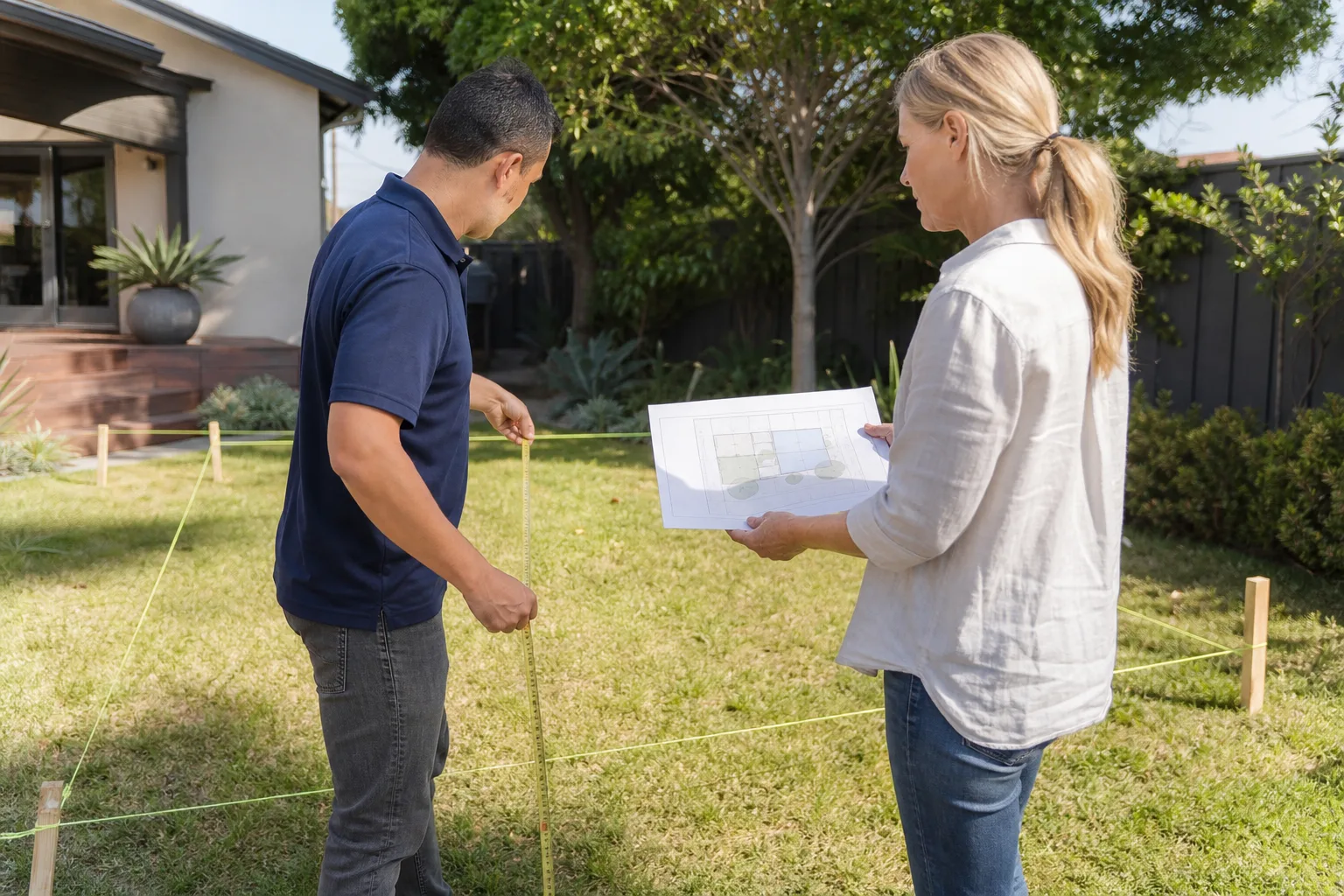
An ADU is not a shed. It’s a dwelling with a foundation, electrical service, sewage connection, and a roof that has to keep a family dry for decades. San Jose’s building department will review the structure, the energy compliance, the fire separation, and the foundation. The work is not unmanageable, but it is not a weekend project, and the consequences of doing it wrong are not cosmetic. A bad foundation pour, a wrong sewer tie-in, or a panel wired incorrectly can cost more to fix than the original scope. If you’re not sure whether your lot can support a detached unit, whether your sewer lateral will pass inspection, or whether your panel has capacity, that’s the moment to pick up the phone. Lodgewick ADU San Jose offers free estimates in San Jose. Call (669) 266-4319 and we’ll walk your property with you, identify the real cost drivers, and give you a written price before any work starts.
Frequently Asked Questions
A 600-square-foot detached ADU in San Jose costs $280,000 to $450,000 all-in for 2026, including design, permits, impact fees, utility connections, finishes, and site restoration. Base construction-only quotes run lower and typically exclude $60,000 to $90,000 in additional costs. Call (669) 266-4319 for a written line-item estimate on your specific lot, or explore more guides & resources on planning your project.
A garage conversion is generally the cheapest legal ADU in San Jose at $180,000 to $300,000 all-in, because the structure already exists and you avoid new foundation, framing, and roof costs. The tradeoff is space and configuration flexibility: you’re working inside an existing envelope rather than designing from scratch.
Yes. Every legal ADU in San Jose requires building permits, plan check, energy compliance, and impact fees. Unpermitted units can’t be rented legally, complicate future home sales, and may be subject to fines. The permit process typically takes three to six months in San Jose depending on plan check volume and revision rounds.
Yes, in most San Jose zoning districts, ADUs can be rented, but the city has owner-occupancy requirements for some parcel types, meaning either the main house or the ADU must be owner-occupied. Confirm the rule for your specific address with the city’s planning department before you build, since some homeowners build expecting rental income and hit restrictions later.
From first design meeting to final inspection, a detached ADU in San Jose typically takes 12 to 18 months. That includes 2 to 3 months for design and engineering, 3 to 6 months for permits, and 6 to 9 months for construction. Garage conversions and attached additions can move slightly faster. Prefab units can shorten the construction phase by two to four months.
Yes. Adding an ADU in San Jose triggers a property tax reassessment on the new improvement, though the increase applies to the added value, not the entire home’s pre-existing value. Under California’s parent-child and senior transfer rules, some homeowners may qualify for exclusions, but for most, expect a supplemental tax bill based on the ADU’s assessed construction cost.
The Bottom Line
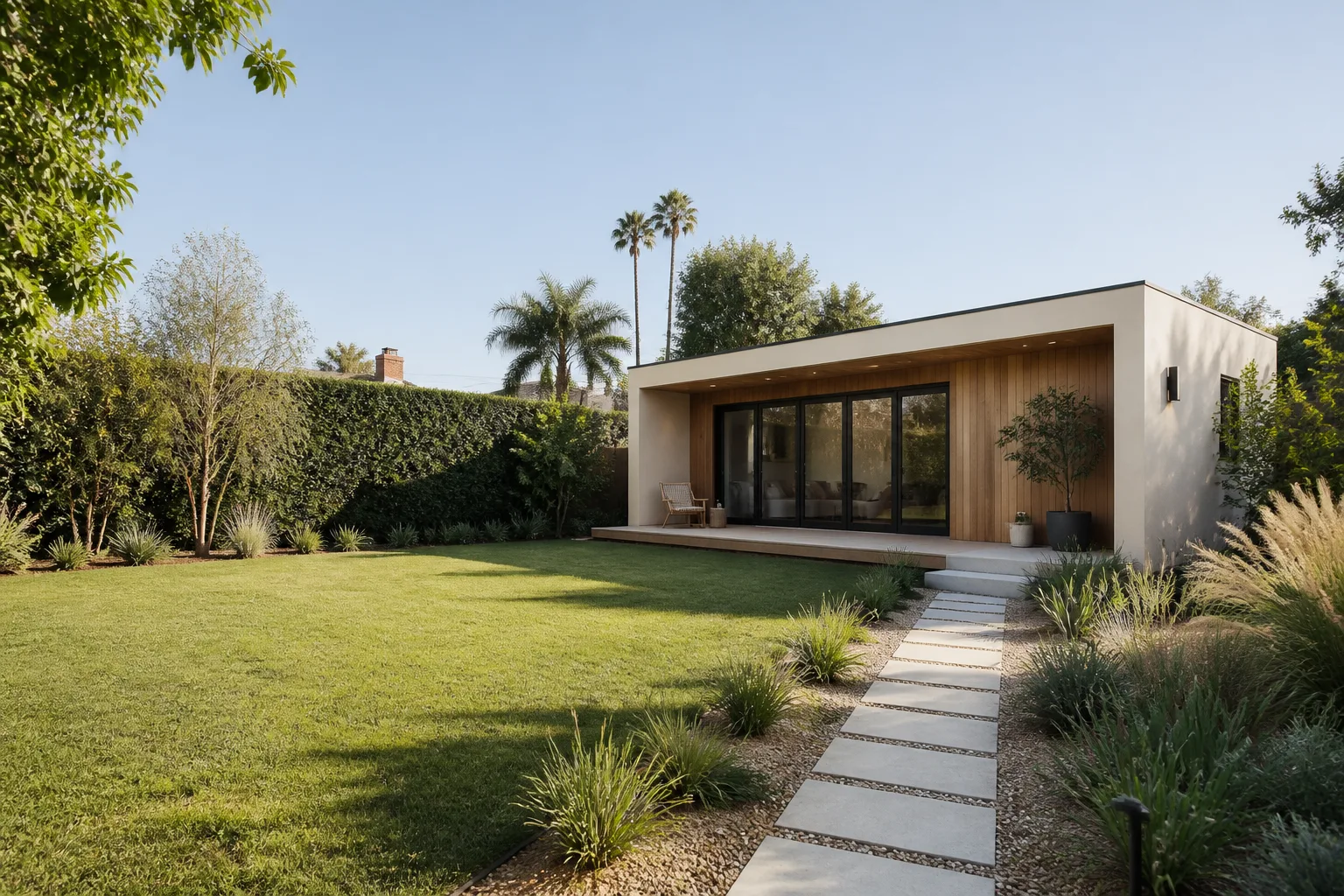
An ADU in San Jose is a six-figure investment, and the difference between a good one and a bad one is rarely visible in the finished photos. It’s in the foundation, the panel, the sewer lateral, and the fee schedule. It’s in whether the price was written down before the first nail was driven, and whether the contractor will come back if something fails. Get the line-item price. Get the exclusions in writing. Get the guarantee. Do that, and the $300,000 you spend becomes an asset that pays you back for thirty years. Skip it, and the same $300,000 becomes a collection of stressful phone calls. For a free, written estimate in San Jose, call (669) 266-4319 or visit the Lodgewick ADU San Jose home page to see how we work.
Written by Russ Delmar, Owner at Lodgewick ADU San Jose, serving San Jose since 2010.