Last updated October 15, 2026
ADU Warning Signs: A San Jose Homeowner’s Reference Guide
Ninety percent of homeowners who end up in a contractor dispute say the red flags were there before they signed. They just didn’t have a name for what they were seeing. A price that “we’ll figure out later.” A scope that’s one paragraph long. A handshake when you asked for a warranty. This guide and our The Complete Guide to ADU in San Jose give those warning signs names, so you can spot a problem while it’s still cheap to fix, not after the concrete is poured. San Jose homeowners building ADUs face a specific set of pressures: high land values, strict permitting, and a crowded market of contractors who all sound the same on the phone. Knowing what to look for before and during construction changes everything.
Quick Answer
ADU contractor warning signs in San Jose fall into four categories: pre-contract behavior (verbal pricing, vague scopes, pressure to skip permits, more than 10 percent down), documentation gaps (missing license numbers, undefined warranty terms, no lien waiver provision), mid-construction shifts (undocumented change orders, waived inspections, unexplained crew absences), and communication breakdowns. The single most reliable early warning sign is a contractor who won’t put a price, a schedule, and a warranty in writing before asking for money. If you see two or more of these signs, pause the project and get a second opinion before signing or paying anything further. A legitimate contractor in San Jose will have no problem meeting every one of these standards.
Table of Contents
- Pre-Contract Warning Signs
- Document Warning Signs
- Mid-Construction Warning Signs
- Real Complications vs. Confusion as Cover
- What to Do If You See a Warning Sign Mid-Project
- Questions to Ask Before You Sign
- Common Mistakes to Avoid
- When to Call a Professional
- Frequently Asked Questions
Pre-Contract Warning Signs
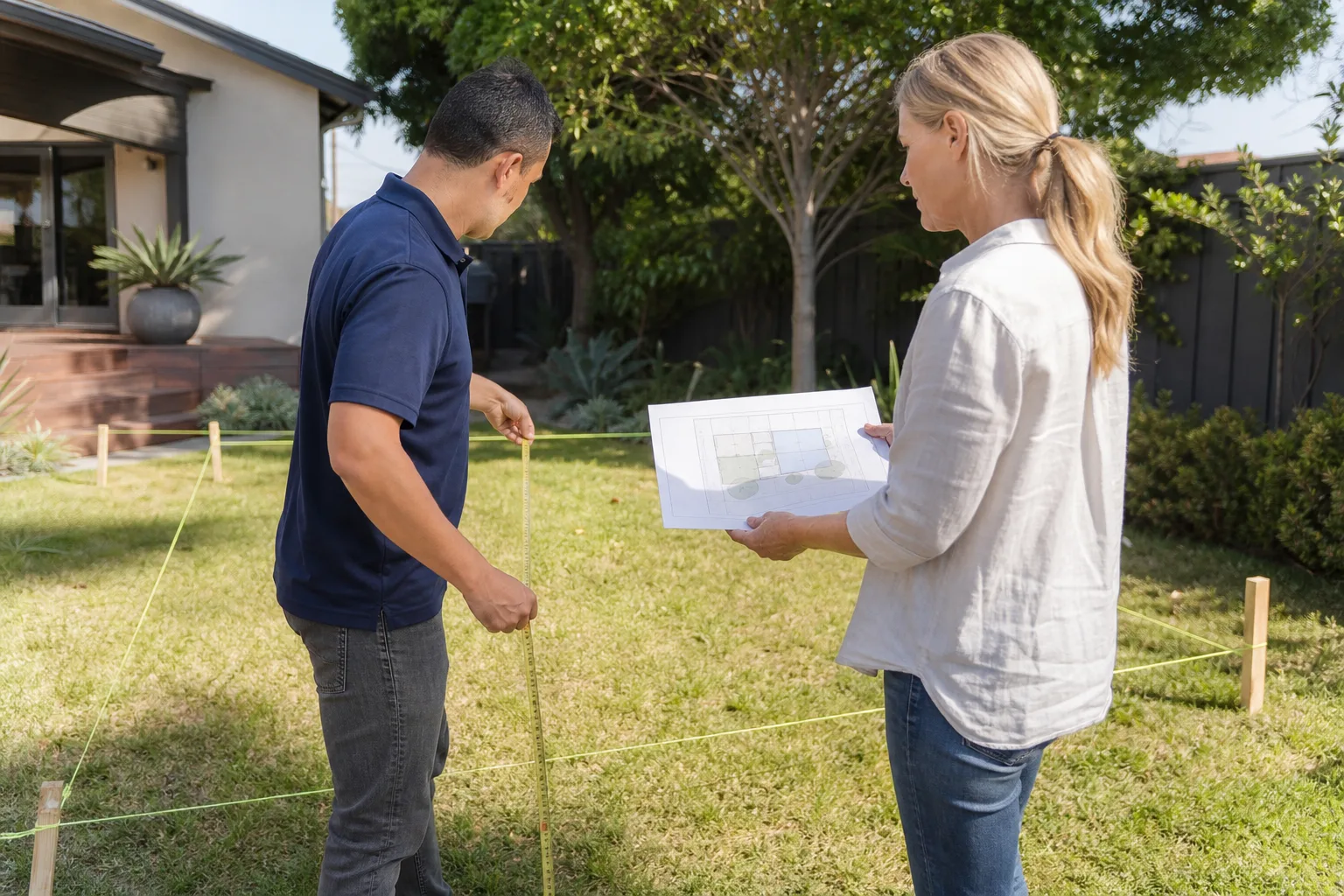
The cheapest time to catch a bad ADU contractor is before you’ve paid them a dollar. In San Jose, where ADU permits can take four to eight months through the city’s planning department, a contractor’s behavior during the bid phase predicts how they’ll behave during the build. Here are the signs we hear about most often from San Jose homeowners who call us after things went sideways, many of whom wish they’d read our DIY vs Professional ADU: The San Jose Homeowner’s Decision Guide first.
Verbal price commitments
“Don’t worry about the number, we’ll get it done for around $250,000.” That’s not a price. That’s a guess wearing a costume. A real ADU builder in San Jose will hand you a written line-item estimate that breaks down site work, foundation, framing, electrical, plumbing, drywall, finishes, and permit fees. If a contractor won’t commit a price to paper, what they’re really saying is the price can float. And when prices float, they float upward. We’ve never once seen a verbal estimate come in lower at contract time.
Vague scope language
A contract that says “build ADU per plan” is a blank check. A legitimate scope of work for a San Jose ADU names specific materials (“James Hardie siding,” not just “siding”), specific fixtures, specific finishes, and a specific list of what’s included and excluded. It says who handles the city inspections, who pulls the permit, who pays for utility connections, and what happens if the soil report comes back ugly. If your scope is three paragraphs and full of words like “comparable” or “equivalent,” you’re not holding a scope. You’re holding an argument waiting to happen.
Pressure to skip or rush permits
San Jose requires permits for ADUs, full stop. A contractor who suggests you “save time” by building first and permitting later is asking you to carry all the legal risk. Unpermitted ADUs can block a future home sale, trigger code-enforcement fines, and in the worst cases get torn down at your expense. The city’s permit process is slow, yes, but it exists to protect you, not annoy your contractor. Any builder who treats the permit process as optional is telling you they don’t intend to be around when the consequences arrive. The same goes for pressure to sign before you’ve reviewed the plans with a third party or before the property survey is done.
Requesting more than 10 percent upfront
California law limits the down payment for home improvement work to ten percent of the contract price or $1,000, whichever is less. This applies to ADU construction and garage conversions in San Jose. If a contractor asks for twenty, thirty, or fifty percent “to secure materials,” that’s a hard stop. A legitimate builder with working capital can start a project on ten percent and bill you in scheduled draws tied to completed milestones. Contractors who demand big upfront money are often financing their last job with your deposit. That’s not a pattern you want to join.
Document Warning Signs
Most San Jose homeowners never see a truly bad ADU contract until it’s too late, because they don’t know what a good one looks like. Here is what should be in the documents, and what absence signals.
Missing license number
Every California contractor must print their license number on every contract, every change order, every invoice, and even their trucks. If the contract lacks a six-digit license number, or the number doesn’t match the California State License Board (CSLB) database, walk away. You can check any license at cslb.ca.gov in under a minute. In San Jose, we recommend verifying the license, the bond, and the workers’ compensation insurance before you sign anything. A contractor who is cagey about their license number is cagey for a reason.
No lien waiver provision
Here’s a scenario most homeowners learn about the hard way: you pay your general contractor in full. Three months later, a subcontractor files a mechanic’s lien against your San Jose property because the general contractor never paid them. Now you owe twice. A proper ADU contract includes language requiring the contractor to provide lien waivers from every sub and supplier before each progress payment is released. No provision, no protection. This one clause can save you tens of thousands of dollars, and most homeowners don’t know to ask for it.
Warranty language that says “defects” without defining it
“Contractor warrants work against defects for one year.” What’s a defect? A wall that cracks? A door that sticks? A roof that leaks when it rains? A warranty that doesn’t define “defects” is a warranty that covers nothing. Strong warranty language names what’s covered (structural issues, water intrusion, electrical failures, finish defects), names what’s excluded (normal settling, homeowner modifications, abuse), and names the remedy (repair, replacement, or refund) and the timeline (specific days to respond, specific days to complete). At Lodgewick ADU San Jose home, our 365-Day Done Right Promise is written into every contract with the specific remedy included: if the work isn’t done right, we come back and make it right within the guarantee period, for free. That’s the standard. Anything less is wiggle room.
Mid-Construction Warning Signs
Construction is messy. Delays happen. Rain happens. Supply chains stall. None of that is automatically a red flag. What is a red flag is how your contractor handles the mess. Here’s what to watch for once the project is underway.
Undocumented change orders
“We found some dry rot in the existing garage wall. We’ll handle it for an extra $8,000, we’ll write it up later.” No. Every change order, no matter how small, should be in writing, signed by you, with a price and a schedule impact stated before the work is done. Verbal change orders are how a $220,000 ADU becomes a $320,000 ADU. We’ve heard from San Jose homeowners who discovered $40,000 in “extras” at the final bill, none of which they’d ever approved in writing. The fix is simple: no written change order, no work, no exception.
Inspections waived “to save time”
San Jose building inspectors inspect at specific stages: foundation, framing, electrical, plumbing, insulation, final. Each inspection must pass before work can proceed. A contractor who wants to skip an inspection or backfill a trench before the inspector arrives is either cutting corners or hiding something. Neither is okay. Insist on inspection records for every stage. You have the right to see them. A contractor who respects the process will tell you when inspections are scheduled so you can be there. One who doesn’t is telling you they’re afraid of what the inspector will find.
Crew absences without explanation or revised schedule
Construction crews don’t work every day. That’s normal. Rain days, supply delays, and sick crew members happen. What’s not normal is a week of no-shows with no call, no text, no revised schedule. Communication is the canary in the ADU coal mine. A contractor who stops returning calls during the build is either in financial trouble, overcommitted, or avoiding a problem they don’t want to face. In San Jose’s tight labor market, some contractors juggle more projects than they can staff, and they let the quietest customer wait the longest. Don’t be the quiet customer. A two-day silence is a problem. A one-week silence is a pattern.
Real Complications vs. Confusion as Cover
Here’s where honesty matters. Some San Jose ADU projects hit real, unavoidable complications. Others hit confusion manufactured by a contractor who’s using delays as cover. Knowing the difference saves you from firing a good builder over nothing, or keeping a bad one over everything.
Legitimate complications
- City inspection backlog. San Jose’s building department has had periods where inspections scheduled two to three weeks out. A contractor can’t control that. A good one tells you about it early and adjusts the schedule in writing.
- Supply chain delays. Windows, electrical panels, and specific siding products have had 8- to 16-week lead times. A contractor who flags this at bid time, not at week ten, is doing their job.
- Soil conditions. Some San Jose lots, especially in areas with expansive clay soils, need deeper footings or different foundation work than the original plan assumed. That’s a legitimate scope change, but it comes with a geotechnical report and a written change order.
- Hidden existing conditions. A garage conversion in a 1940s home in the Rose Garden neighborhood may hide knob-and-tube wiring or a foundation with more cracks than the plans anticipated. This is why a good contractor builds a contingency into the estimate and explains it upfront.
Confusion as cover
- “The city changed their requirements.” San Jose’s ADU rules are public. Ask for the specific code section and the city’s written communication. If the contractor can’t produce either, they’re stalling or inflating.
- “You need an upgraded electrical panel, and it’s $12,000.” Sometimes true. But this should be backed by a load calculation from an electrician, not a contractor’s word. Get a second opinion.
- “We can’t work until you pay for the next phase even though the last phase isn’t done.” No. Payment follows completion, not precedes it. If a contractor is demanding money ahead of schedule, something has gone wrong with their finances, not your project.
- “That’s not in the contract.” If what they’re pointing to is clearly in the contract, don’t let a contractor gaslight you into paying for what you already bought. Keep a copy of the contract handy and refer to it calmly and specifically.
What to Do If You See a Warning Sign Mid-Project
Seeing a warning sign doesn’t mean the project is doomed. It means you act. Here are the specific steps to preserve your options without blowing up a recoverable situation. For more guides & resources on protecting your project, explore our blog. These steps also protect your legal position if the relationship does end up in front of the CSLB or in court.
- Put it in writing. Send an email or text (text is fine, but email is better for records) that states what you observed, what was promised, what has changed, and what you need. “On March 14, you said the foundation inspection was scheduled for March 18. As of today, no inspection has been scheduled and I haven’t heard from you in five days. Please provide a written schedule update by Friday.” Calm, factual, specific.
- Request a written change order or correction. If the issue involves scope or price, ask for a written change order that itemizes the change and its cost. If the issue involves a broken promise or a missed deadline, ask for a written correction to the schedule. Document everything.
- Hold payment. If work has stopped, or a payment draw is due but the work it’s supposed to cover hasn’t been completed, withhold that draw. Do not pay for work that hasn’t been done. You have the right to withhold payment for incomplete or defective work under California law. This is the single most powerful tool you have, and it’s the one homeowners forget.
- Call the CSLB. If the contractor is unresponsive, refuses to correct the issue, or the problem involves potential license violations, file a complaint with the California State License Board. They can investigate, cite, and in serious cases, suspend a license. The CSLB also runs a complaint mediation program that resolves thousands of disputes each year without lawyers.
- Get a second opinion. Bring in another licensed San Jose contractor to assess the work and the issue. You’ll pay a small fee for the visit, and you’ll get an objective read on whether the problem is real, cosmetic, or somewhere in between. This is also the point where we tell San Jose homeowners to call us. We do this every day, and a free estimate from a second contractor costs nothing and changes everything.
Questions to Ask Before You Sign
The best way to avoid warning signs is to surface them before they can hide. Ask these eight questions of any ADU contractor you’re considering in San Jose, and listen carefully to the answers.
- “Will you put the price in writing before any work starts?” If the answer is anything but “yes, always,” that’s your first warning sign.
- “What happens if the project goes over budget?” A good contractor explains who pays for what, how change orders work, and what contingencies exist. A vague answer means you’re the contingency.
- “Who pulls the permits, and what’s the timeline?” In San Jose, the contractor should pull the permits. If they suggest you pull them as the owner-builder, ask why. It’s often a sign they don’t want the permit to attach to their license.
- “What does your warranty cover, and for how long?” Get it in writing. If it’s not in writing, it doesn’t exist. Here’s our answer to this question: the 365-Day Done Right Promise covers workmanship defects for a full year, with a free return visit to make it right if the work fails within that period. That’s the standard to measure against.
- “Can I see your license, bond, and workers’ comp certificates?” A legitimate contractor has these ready. A contractor who hesitates is hiding something.
- “Who will be on site day to day, and who do I call with questions?” You should have a named project lead and a direct phone number. Not a call center. Not an email address that goes nowhere. A person.
- “How do you handle subcontracted work?” Most ADU builds in San Jose involve subs for electrical, plumbing, and roofing. Ask who the subs are, whether they’re licensed, and how lien waivers are handled. A contractor who says “we do everything in-house” is either tiny or not being straight with you.
- “What would make this project go wrong?” This is the question that reveals everything. A good contractor names the risks: permit delays, soil surprises, long lead times on windows. A bad contractor says “nothing, we never have problems.” Every ADU project has complications. The contractor who can name them is the one who can handle them.
Common Mistakes to Avoid
- Signing a contract without a written scope of work. If it’s not in the contract, it doesn’t exist. A one-page contract for a $250,000 project is an invitation to argue later. Insist on line items, materials, and finishes.
- Paying more than 10 percent upfront. California caps the down payment, and for good reason. Homeowners who pay big deposits lose their leverage the moment the money leaves their account. Keep the deposit at the legal minimum.
- Ignoring the license check. In San Jose, where ADUs are a hot market, unlicensed operators chase the same leads as legitimate builders. Check cslb.ca.gov before you sign. It takes sixty seconds.
- Accepting verbal change orders. “We’ll handle it later” is the most expensive phrase in construction. Every change, in writing, with a price, before the work happens. No exceptions.
- Staying silent when communication stops. Homeowners often wait days or weeks before checking in, not wanting to be “difficult.” By then, the contractor has moved on to other jobs. Call early, call often, and require a written response.
- Finishing the project with unresolved defects. Some San Jose homeowners are so eager to be done that they accept loose doorknobs, nail pops, and sloppy caulk rather than fight for a fix. Those small defects are exactly what a one-year warranty is for. Use it.
When to Call a Professional
Some situations you can handle with a phone call and a written letter. Others require professional eyes. If you’re seeing multiple warning signs before signing, or pattern of skipped inspections, unexplained delays, or undocumented costs during construction, it’s time to bring in a second opinion before things escalate further. If a contractor has stopped returning calls or is threatening to walk off the job unless you pay more than the contract allows, don’t negotiate alone. And if you’re starting fresh after a bad experience, the wisest move is to get a complete written estimate from a builder who will commit to the price, the schedule, and the guarantee in writing, before work begins. Lodgewick ADU San Jose offers free estimates in San Jose, and we’ll walk you through the scope, the price, and the warranty on paper before you spend a dollar. As a ADU Builders in San Jose, we’ve seen every warning sign in this guide, and we know how to build without tripping over them. Call (669) 266-4319 and ask for Russ. He’ll give you a straight answer about your project.
Frequently Asked Questions
The most common warning sign is a contractor who gives a verbal price but won’t put it in writing. A written price is the baseline for everything else: it defines the scope, sets the payment schedule, and anchors the contract. San Jose homeowners who get a vague number in a conversation are almost always handed a higher number at signing. Call (669) 266-4319 for a written quote, no commitment needed.
California law limits the down payment for home improvement contracts to ten percent of the total contract price or $1,000, whichever is less. That applies to ADU construction and garage conversions in San Jose. No contractor should ask for more than that before work begins. If you’re being pressured for a larger deposit, that’s a warning sign in itself.
A proper ADU contract includes the contractor’s license number, a line-item scope of work naming specific materials and finishes, a payment schedule tied to completed milestones, a written change order process, a lien waiver provision, and a written warranty that defines what’s covered, what’s excluded, and what the remedy is. If any of these elements is missing, don’t sign until it’s added.
San Jose requires a building permit for every ADU, including detached units, attached conversions, and garage conversions. The city’s ADU review process includes plan review, structural review, and site review, and the permit must be closed with a final inspection before the unit can be legally occupied. Unpermitted ADUs can block a future sale and trigger fines. A legitimate builder pulls the permit and carries it through to closure.
From signed contract to final inspection, a typical San Jose ADU takes eight to fourteen months. The timeline breaks down roughly as: design and plan review (three to five months), site prep and foundation (one to two months), framing and envelope (one to two months), interior finishes and MEP (two to three months), and final inspections and punch list (one month). Prefab options from companies like Abodu and Plant Prefab can shorten the timeline if your lot is a good fit.
Yes. Under California law, you have the right to withhold payment for work that hasn’t been completed or that fails to meet the contract specifications. The proper sequence is: document the issue in writing, request a correction, and hold the specific payment for the incomplete work while you pursue resolution. For guidance on your specific situation, call (669) 266-4319 and we’ll talk you through it.
The Bottom Line
ADU warning signs show up early, and they show up in behavior, not blueprints. A contractor who won’t write down the price, won’t define the warranty, won’t name the subcontractors, and won’t return your calls is telling you exactly who they are before the foundation goes in. Listen. San Jose has plenty of good ADU builders and plenty of bad ones, and the difference is visible in the paperwork and the phone calls, not the portfolio photos. If you’re building a Garage Conversion Contractor in San Jose project or a detached unit, demand a written price, a written scope, and a written guarantee. If you’re planning a larger build, our Home Addition Contractor in San Jose page covers similar territory. The guide above gives you the names for the warning signs. Now you just have to use them. We work with products from manufacturers including Abodu, Plant Prefab, Tuff Shed, and James Hardie, matched to your San Jose lot and budget. Call (669) 266-4319 for a free estimate, in writing, with the guarantee named.
Written by Russ Delmar, Owner at Lodgewick ADU San Jose, serving San Jose since 2010.